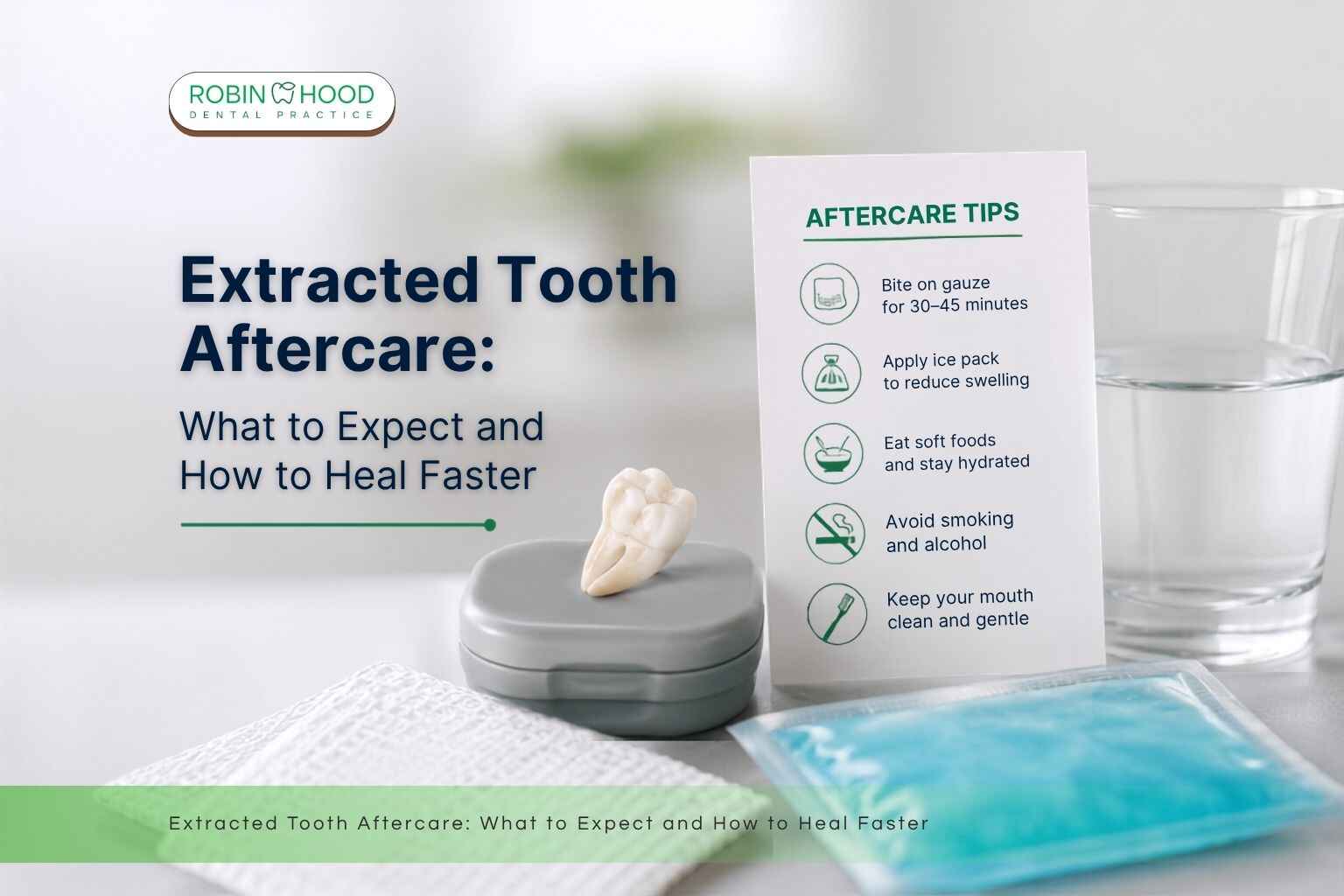
Having a tooth removed can be a daunting experience, but proper aftercare plays a vital role in how well and how quickly you recover. Whether your extraction was due to decay, damage, or overcrowding, following the right steps afterwards will help reduce pain, prevent infection, and support normal healing. At Robinhood Dental Practice, patients commonly contact us a few days after an extraction worried that something's wrong — most of the time it's ordinary healing, which has a fairly specific pattern that's different from genuine complications, and this guide will help you tell the two apart.
This guide covers what to expect after a tooth extraction, day by day, how to care for your mouth at each stage, and how to spot the difference between normal healing and something that needs a dentist's attention. If you haven't had the extraction yet, our guide to what happens before, during and after the procedure itself covers the appointment side of things.
What Is Normal After a Tooth Extraction?
It helps to have a quick reference before going into the detail below.
| Normal healing | Not normal — contact your dentist |
|---|---|
| Mild bleeding or oozing for the first few hours | Heavy bleeding that doesn't settle with gauze pressure |
| Soreness, swelling, and some bruising | Swelling that keeps increasing after day 2-3 |
| Jaw stiffness for a few days | Severe pain that isn't easing with painkillers |
| A visible socket/hole that gradually shrinks | Pain that gets worse after initially improving |
| Mild, improving discomfort day by day | Fever, feeling generally unwell, or a bad taste with worsening pain |
The pattern that matters most is direction: normal healing gets steadily better each day. Anything that's getting worse, or that improves and then suddenly worsens again, is worth a call — see the dry socket section below for the most common reason this happens.
What Happens After a Tooth Extraction?
After a tooth is removed, your dentist places a small piece of gauze over the empty socket and asks you to bite down. This helps a blood clot form, which is the single most important part of healing — it acts as a protective layer over the bone and nerves underneath, and stops bacteria or food getting into the wound. Almost everything in this guide comes back to one idea: protect that clot.
It's completely normal to experience mild bleeding for the first few hours, some swelling around the gum or cheek, general soreness, and slight stiffness in the jaw. These symptoms usually ease within a few days with proper aftercare.
Day-by-Day Healing Timeline
| Timeframe | What to Expect |
|---|---|
| Day 1 (day of extraction) | Gauze stays in place for 30–60 minutes to let the clot form. Mild bleeding and swelling begin. Soft, cool foods only — no rinsing, spitting, or straws. |
| Days 2–3 | Swelling and discomfort typically peak here, manageable with the pain relief your dentist recommended. Gentle salt-water rinses can usually begin from day 2, after meals. |
| Days 3–5 | Gum tissue starts visibly closing over the socket. This is also the window where dry socket, if it's going to happen, typically develops — pain getting worse rather than better around now is the key warning sign, covered in detail below. |
| Week 1 | Pain and swelling should be clearly easing by the end of the week. Normal brushing can usually resume around the site, guided by comfort. |
| Weeks 2–3 | The socket continues closing at the surface, and most people are back to a fully normal diet. |
| Months 2–3 | Bone and gum tissue fill in the socket space underneath — this final stage takes far longer than the surface looks like it should, which is normal. |
This is a general guide, not a guarantee — healing pace varies by extraction complexity, age, and how closely aftercare instructions are followed.
The First 24 Hours: The Most Important Phase
The first day is the most critical for recovery. Here's what helps, and what to avoid:
What to do
- Bite gently on the gauze pad for at least 30–60 minutes to help the clot form
- Rest and avoid strenuous activity — this reduces the risk of bleeding or disturbing the clot
- Use an ice pack on the outside of your face, 10 minutes at a time, to help with swelling
- Take the pain relief recommended by your dentist and follow the instructions on the packet — paracetamol or ibuprofen may be suitable for some adults, but not everyone can take every painkiller, so check rather than assume
What to avoid
- Rinsing or spitting forcefully — this can dislodge the clot and delay healing
- Drinking through a straw — the suction can break the clot loose
- Smoking or vaping for at least 48–72 hours, since it raises the risk of infection and dry socket
- Hot drinks and alcohol for the first day
Eating and Drinking After Extraction
Food choices matter for the first two to three days. Stick to soft options such as yoghurt, mashed potatoes, lukewarm soup, scrambled eggs, and smoothies — if you have a smoothie, drink it from a cup or eat it with a spoon rather than using a straw, since the suction can dislodge the clot just as easily as with any other drink. Avoid crunchy, spicy, or sticky foods that could irritate the socket or get trapped in the wound, and gradually reintroduce solid foods as your mouth starts to feel more comfortable.
Oral Hygiene and Cleaning the Area
Keeping your mouth clean still matters, just gently: brush your teeth carefully, avoiding the extraction site for the first 24 hours. From day two onwards, rinse gently with warm salt water — half a teaspoon of salt in a glass of water — two to three times a day, especially after meals. Avoid mouthwash or hydrogen peroxide during the first few days unless your dentist has specifically recommended it.
Managing Pain and Swelling
Some discomfort is expected, and it's straightforward to manage: take any prescribed painkillers as directed, use ice packs during the first 24 hours, and sleep with your head slightly elevated to reduce blood flow and swelling around the site. Pain should gradually improve each day. If it worsens, or becomes severe after the first couple of days, that's worth a call to your dentist rather than waiting it out — see the dry socket section below for what that pattern usually looks like.
Dry Socket: Symptoms, Causes and What to Do
Dry socket — the medical name is alveolar osteitis — happens when the blood clot protecting the socket is lost, dislodged, or never forms properly, leaving bone and nerve endings exposed. It's the complication most people worry about, but it's genuinely uncommon, and straightforward to treat once you see a dentist.
What it feels like
The defining sign is pain that gets worse a few days after the extraction rather than better — typically 3 to 5 days after treatment, according to NHS guidance. It's often paired with a foul taste or bad breath, and sometimes visible bone in the socket rather than a clot. Ordinary healing discomfort, by contrast, peaks in the first two to three days and then steadily improves — the direction of change is what tells them apart.
What increases the risk
Smoking, hormonal contraceptive pill use, and having a lower tooth or wisdom tooth removed all raise the likelihood of dry socket, which is part of why the no-smoking and no-straw instructions in this guide matter more than they might seem to.
What to do about it
Dry socket isn't something to treat at home — it needs a dentist to clean the socket, and they may place a medicated dressing to help control the pain while the area heals. Harvard Health notes that a cold pack, salt-water rinsing, and over-the-counter pain relief can help alongside professional treatment. Most cases settle within about a week to ten days once properly treated. If you develop these symptoms, contact the practice that carried out your extraction rather than waiting for your next scheduled check-up.
How Much Does Tooth Extraction Cost?
Cost depends on whether the extraction is simple, surgical, or involves a wisdom tooth. On the NHS, extractions fall under Band 2 (£76.60); privately at Robinhood Dental, straightforward extractions start from £110. See our complete tooth extraction cost guide for the full breakdown by case type.
When to Call Your Dentist
Most extractions heal without complications, but the direction pain and swelling are moving in is the main thing to watch.
Contact your dentist promptly if:
- Pain is getting worse rather than better, particularly from day 3 onwards
- Bleeding doesn't settle after firm gauze pressure
- Swelling keeps increasing rather than easing
- You develop a bad taste or smell from the socket
Seek urgent care if:
- Swelling is severe or affects your breathing or swallowing
- Bleeding won't stop despite sustained pressure
- You feel seriously unwell alongside these symptoms
A few extra habits help recovery along generally: stay well hydrated, eat nutritious food as soon as you comfortably can, avoid poking the area with your tongue or fingers, and don't skip any follow-up appointment your dentist has scheduled.
Frequently Asked Questions
How long does it take for a tooth extraction to heal completely?
The surface usually looks healed within two to three weeks, but the bone and gum tissue underneath continue filling in for around two to three months. Both stages matter — the site can look fine on the outside well before it's fully healed underneath.
How long does pain last after a tooth extraction?
Pain is usually most noticeable in the first one to three days, then gradually improves. Surgical or wisdom tooth extractions can take a little longer to settle. Pain that eases and then suddenly gets worse again isn't typical of ordinary healing and is worth getting checked.
How long should bleeding last after a tooth extraction?
Light oozing or a pink tinge in saliva for the first 24 hours is normal. Active bleeding that doesn't slow with firm gauze pressure, or that restarts heavily later, isn't — that's worth calling about.
What does dry socket feel like compared to normal healing pain?
Normal healing pain peaks in the first two to three days, then steadily eases. Dry socket does the opposite — pain that was settling suddenly gets worse, usually three to five days in, often with a bad taste or smell.
When can I go back to normal brushing?
You can brush everywhere except directly over the extraction site from day one. Most people can brush the site itself gently again from around a week in, once initial healing is underway — your dentist can confirm timing for your specific case.
Can I exercise after a tooth extraction?
Avoid strenuous activity for at least the first 24 hours, since raised blood pressure can disturb the clot and restart bleeding. Light activity is usually fine after that, with a gradual return to normal exercise over the following few days.
When can I smoke or vape after a tooth extraction?
Wait at least 48–72 hours, and longer if you can manage it. Smoking and vaping are among the biggest risk factors for dry socket, since the suction and chemicals both interfere with clot formation.
Is it normal to still see a hole where my tooth was removed?
Yes. The socket closes gradually over two to three weeks and isn't expected to look fully filled in right away. What matters is that it's getting smaller and less tender, not staying the same or getting worse.
Is bad breath after an extraction always a sign of dry socket?
Not always — some mild odour during early healing is common. But bad breath paired with worsening pain a few days in, rather than improving pain, is the combination worth getting checked.
Related Reading
If you're preparing for an extraction rather than recovering from one, our tooth extraction procedure guide covers the consultation, what happens during the appointment, and sedation options. For pricing, see our tooth extraction cost guide.
Concerned About Your Recovery?
If pain is getting worse rather than better, bleeding hasn't settled, or you're worried about dry socket, don't wait it out — contact Robinhood Dental Practice for advice.
Call 0121 744 1484 — 1491 Stratford Road, Hall Green, Birmingham B28 9HT, open seven days a week.