Last updated: September, 2026
Quick Answer
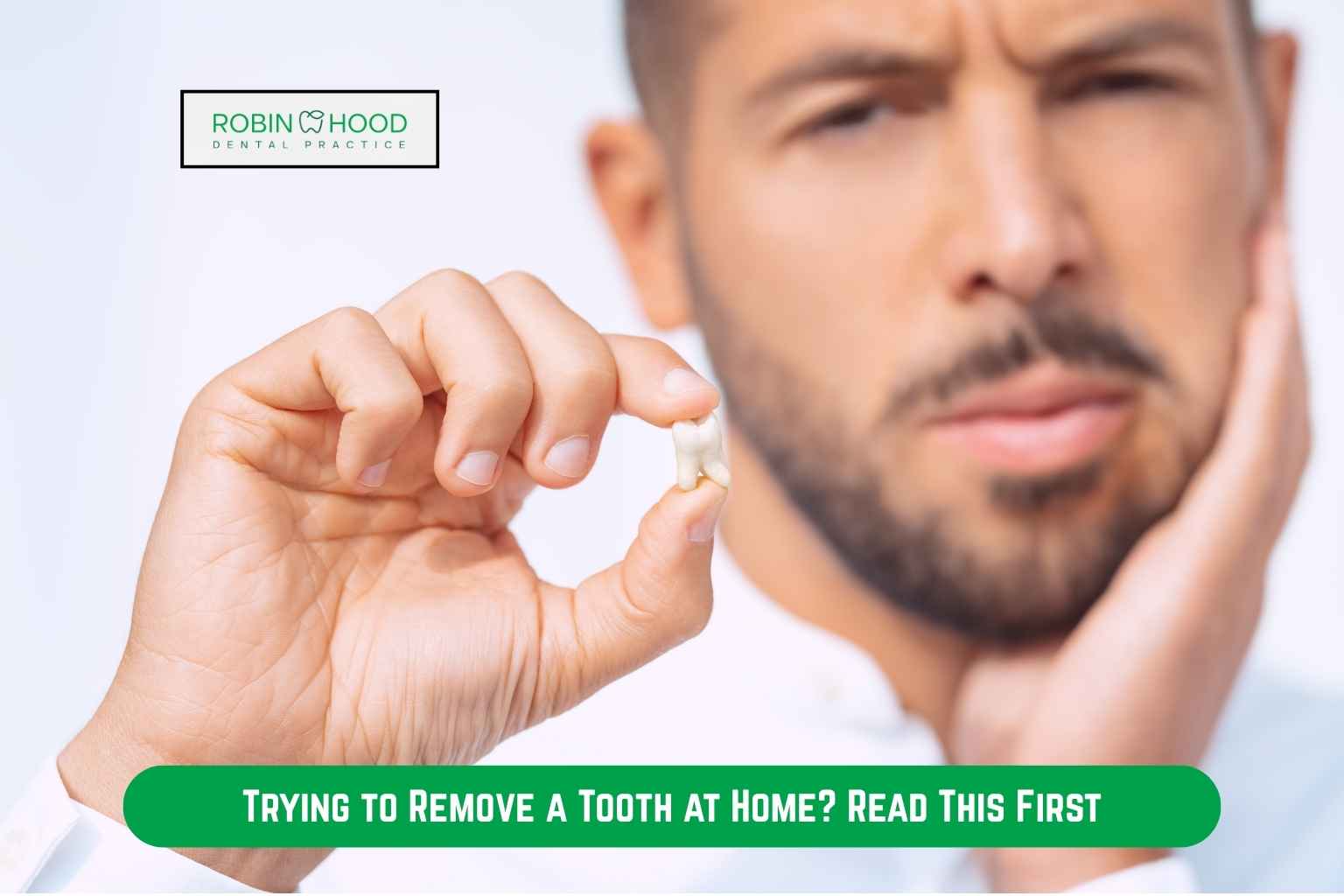
Don't pull your own tooth, and don't numb your own gums to try. A tooth that's loose or painful enough to consider removing yourself needs a dentist, not a DIY procedure — home extraction carries a real risk of broken roots, jaw fracture, severe infection, and permanent nerve damage. Safe pain relief while you wait is covered below. Call Robinhood Dental Practice on 0121 744 1484 for a same-day emergency appointment — we're open 7 days a week and you don't need to already be registered with us.
We Understand Why You're Searching for This
If you're looking for how to numb a tooth to pull it yourself, you're almost certainly in real pain, and probably worried about cost, waiting times, or getting an appointment quickly. Those are all fair concerns — but self-extraction is genuinely one of the riskiest things you can do to deal with them, and it very often makes the underlying problem worse, not better. Here's why, and what actually helps in the meantime.
Why Self-Extraction Is Genuinely Dangerous
- The root can snap off in the socket. Teeth are anchored by roots you can't see from the outside, and pulling without the right technique very often leaves fragments behind — which then need a more complicated (and more expensive) surgical extraction to remove properly.
- You can fracture your jaw. Applying enough force to remove a tooth that isn't already loose can damage the surrounding bone, particularly with back teeth.
- Infection risk goes up, not down. Non-sterile tools and hands introduce bacteria directly into an open socket, which can turn a manageable infection into a spreading one.
- Numbing agents sold for this purpose don't work the way dental anaesthetic does. Over-the-counter numbing gels only reach the surface of the gum — they don't anaesthetise the tooth's nerve or root the way an injected local anaesthetic does, so "numbing" before a home extraction doesn't actually make it safe or pain-free.
- You could damage the nerve permanently. Nerves and blood vessels sit close to the tooth roots, especially in the lower jaw — damage here can cause lasting numbness or chronic pain.
- It doesn't treat the actual problem. If the pain is from infection, removing the tooth without properly cleaning the socket can leave infection behind, which can spread to the jaw or, in rare but serious cases, further into the body.
Safe Pain Relief While You Get an Appointment
None of this replaces treatment — it's to keep you comfortable until you're seen.
- Paracetamol and ibuprofen together is generally considered safe and effective for adults, more so than either alone — always follow the dosing on the packet.
- Warm salt-water rinse. Half a teaspoon of salt in a glass of warm water, swished gently and spat out — safe, and worth repeating a few times a day.
- Cold compress against the outside of your cheek for swelling — never apply ice directly to the tooth or gum.
- Clove oil, applied sparingly on a cotton bud to the affected area, has a mild natural numbing effect for some people.
- Never place a painkiller, including aspirin, directly against the tooth or gum — it's an old myth that actually causes a chemical burn to the soft tissue.
What Actually Happens If You Wait It Out
A loose or painful tooth that's left untreated doesn't tend to resolve on its own. Infection can spread to surrounding teeth, the jawbone, or — in rare but serious cases — into the bloodstream. The longer it's left, the more likely the eventual treatment needed becomes more complex, and more expensive, than it would have been with an earlier same-day appointment.
Go to A&E or call 999 if you have:
- Swelling spreading toward your neck or the area around your eye
- Difficulty swallowing or breathing
- Uncontrolled bleeding that won't stop with firm pressure
- A fever alongside worsening facial swelling
What a Same-Day Emergency Extraction Actually Involves
- Assessment and X-ray to confirm what's actually going on and whether the tooth can be saved or needs to come out.
- Proper local anaesthetic, injected so the tooth and surrounding area are genuinely numb — not a surface gel.
- Extraction, carried out with sterile instruments and the training to avoid the complications listed above.
- Clear aftercare guidance to support healing and avoid infection or dry socket.
What It Costs
| Treatment | Price From |
|---|---|
| Consultation (assessment & X-rays if booked online) | £35 |
| Extraction, straightforward | £110 – £195 |
| Antibiotic prescription (if infection is present) | £20 |
NHS urgent care is charged at Band 1 (£27.90) for assessment, or Band 2 (£76.60) if extraction is carried out. Surgical extractions, including those needed to remove a fragment left by a failed home extraction, are priced separately once assessed.
Frequently Asked Questions
Is it ever safe to pull my own tooth?
No — even a tooth that feels very loose should be removed by a dentist. What feels loose from the outside can still have roots or bone attachment that cause complications if pulled without the right technique and equipment.
Can I use numbing gel from the pharmacy to pull a tooth myself?
Over-the-counter numbing gel only reaches the surface of the gum — it doesn't anaesthetise the tooth's root or nerve the way an injected local anaesthetic does, so it won't make self-extraction pain-free or safe.
What if I can't afford to see a dentist right now?
Call NHS 111 — they can direct you to an NHS urgent dental service, charged at a fixed Band rate regardless of what's needed. It's a far safer and often cheaper route in the long run than dealing with the complications of a failed home extraction.
My tooth is already very loose — does that change anything?
It's still worth having a dentist remove it. A loose tooth can be loose due to infection or bone loss, both of which need proper assessment rather than just removal.
Can I get a same-day emergency extraction without being registered?
Yes. You don't need to be an existing patient to book an emergency consultation with us.
Get Seen Safely, Today
Call Robinhood Dental Practice on 0121 744 1484 — we hold same-day emergency slots every day of the week, and you don't need to already be registered with us.
1491 Stratford Road, Hall Green, Birmingham B28 9HT | Open 7 days a week
This article is for general information only and does not replace professional dental advice. If you are experiencing a medical emergency, call 999 or go to your nearest A&E.