How to Clean a Gum Shield: The Complete UK Guide to Mouthguard Care
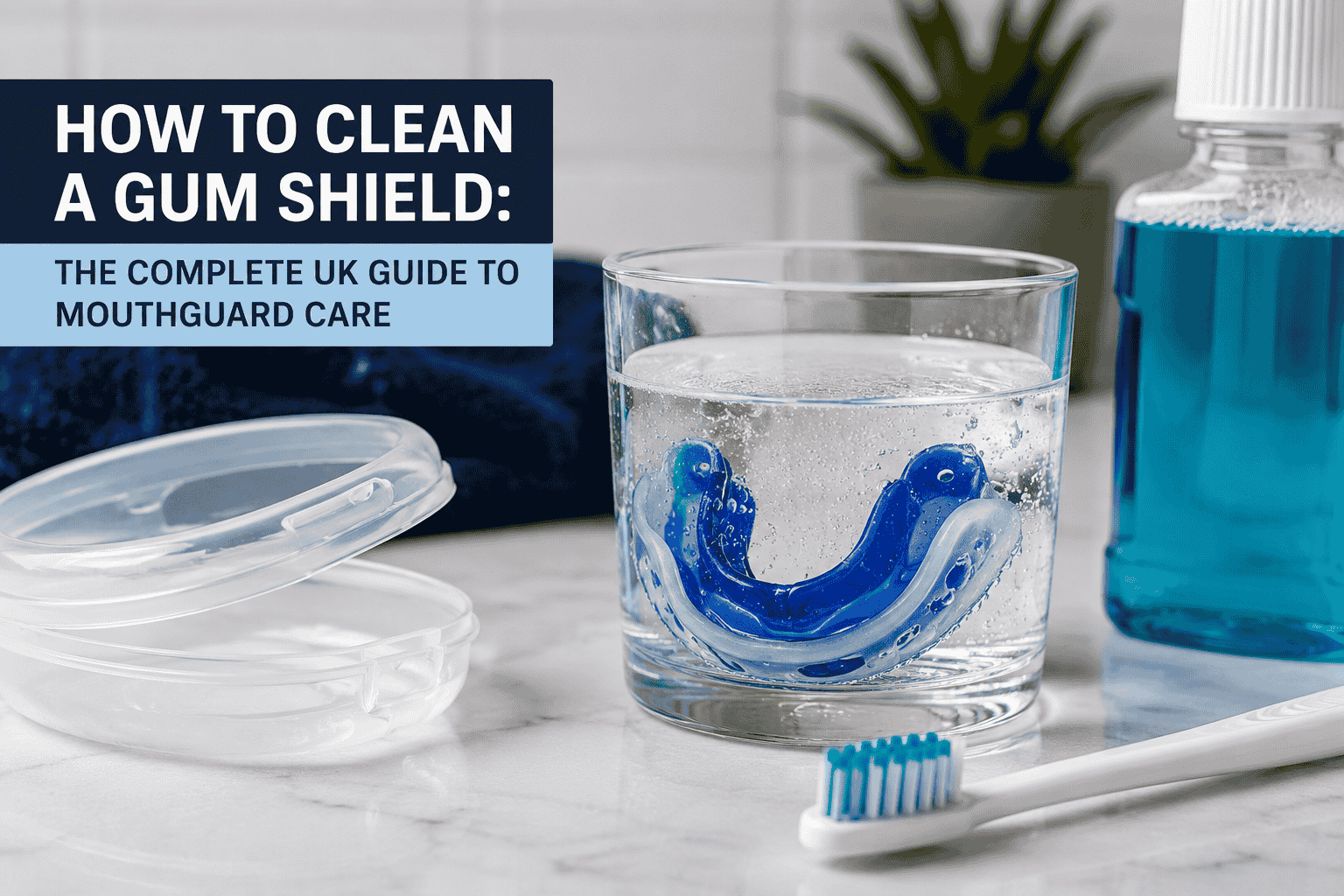
Whether you're wearing a mouthguard for rugby, to stop yourself grinding your teeth into dust at night, or because your dentist told you to, here's the truth: cleaning it matters just as much as wearing it. Skip this part, and you're basically tucking a bacteria hotel into your mouth every night. Not great.
This guide covers everything — daily cleaning, deep-cleaning your night guard, the best gum guard cleaner products in the UK, and what to avoid like the plague.

What Is a Gum Shield (And Why Bother Cleaning It)?
A gum shield, mouthguard, bite guard, night guard — call it what you like, it's that custom or off-the-shelf device that sits over your teeth. Millions of people across the UK wear one, either for contact sports like rugby and boxing, or to deal with bruxism (the dental term for grinding your teeth like you're auditioning for a horror film in your sleep).
Here's the thing: your mouthguard sits in your mouth for hours at a time, soaking up saliva, bacteria, plaque, and whatever food particles got left behind. Neglect it, and it turns into a breeding ground for nasty microorganisms — leading to bad breath, irritated gums, and sometimes infections. So no, teeth guard cleaning isn't optional. It's as much a part of your routine as brushing your teeth.
Know Your Mouthguard Type First
Before you start scrubbing, it's worth knowing exactly what you're dealing with:
A sports gum shield protects your teeth during physical activity. A night guard (sometimes called a night mouthguard) stops grinding and clenching damage while you sleep. A bite guard is often the same thing as a night guard, though it can also refer to occlusal splints your dentist prescribes. And a boil-and-bite mouthguard is the DIY option you mould at home with hot water.
The good news? The core cleaning principles are the same across the board — though if you've got a prescription-grade guard from your dentist, you'll want to be a bit gentler with it.
Daily Cleaning: Your Two-Minute Routine
This is the single most important habit you can build. Clean it every time it comes out of your mouth — no exceptions.
Rinse it immediately. The moment you take your guard out, run it under cool water. This washes away loose saliva and debris before it has a chance to dry on and become stubborn. And whatever you do, skip the hot water — heat will warp the shape, especially on boil-and-bite guards.
Brush gently. Grab a soft-bristled toothbrush (ideally a different one from your own) and give every surface a gentle scrub — inside, outside, and into the grooves. A bit of non-abrasive, unscented soap or a proper gum guard cleaner works well here. Skip the toothpaste, though. It sounds like the obvious choice, but most formulas contain tiny abrasives that scratch the surface — and those scratches become perfect little hideouts for bacteria.
Rinse again. Make sure every trace of soap or cleaner is gone.
Let it air-dry completely. Pop it on a clean, dry surface before storing. A damp guard sealed in a case is basically an invitation for mould and bacteria to move in.
Store it properly. Use a ventilated, hard-sided case — most dentists provide one, and they usually come with shop-bought guards too. Don't wrap it in tissue or chuck it loose in your bag.
Cleaning a Night Guard: A Bit More TLC
Night guard cleaning deserves its own section, mainly because these things are an investment. A custom-made night guard from a UK dentist can run anywhere from £150 to £500+, so it's worth protecting.
The daily routine above still applies every morning — that's non-negotiable. But how to clean a night guard well isn't really about fancy techniques. It's about consistency. Do it every single day, and you're 90% of the way there.
For a deeper clean once a week, try one of these:
White vinegar soak. Mix equal parts white vinegar and water, and soak your guard for 20–30 minutes. Vinegar is a natural disinfectant and won't damage acrylic or softer guard materials. Follow up with a gentle brush and rinse.
Diluted hydrogen peroxide. Mix 3% hydrogen peroxide with equal parts water for an effective weekly soak — but no longer than 30 minutes, and never use it undiluted, as it can degrade some materials over time.
Baking soda paste. A simple paste of bicarbonate of soda and water, applied with a soft brush, helps neutralise odours and lift surface staining. Rinse well afterwards.
Cleaning a Bite Guard
The principles for how to clean a bite guard are largely the same — but bite guards, especially hard acrylic splints used for TMJ and bruxism, need a bit more care since they're precision dental appliances. A few extra rules apply:
Keep them away from heat entirely — that means no dishwashers and no hot water. Skip alcohol-based mouthwash too, since alcohol dries out and can crack acrylic. Stick to purpose-made cleaning tablets or the vinegar soak mentioned above. And every six months, get your dentist to give it a proper ultrasonic clean.
If you notice cracks, looseness, or a smell that won't go away no matter how often you clean it, get it checked out by your dental practice.
Best Gum Guard Cleaner Products in the UK
If you'd rather use a ready-made product than mix your own solutions, you've got plenty of options at UK pharmacies and online.
Cleaning tablets are probably the most popular choice — effervescent tablets similar to denture cleaners. Drop one into a glass of cool water, soak your guard for 5–15 minutes, then rinse. Just make sure you're picking ones labelled for retainers and mouthguards specifically, not dentures — the formulas aren't quite the same. Options available in the UK include Retainer Brite tablets, Steradent Active Plus (double-check it suits your guard type), and Cleanse Pro Retainer and Mouthguard Cleaner.
Ultrasonic cleaners are worth considering if you've got a higher-end custom guard. These small devices (£20–£60 online) use sound waves to shake loose debris and bacteria without any scrubbing. Plenty of UK dentists recommend them for patients with hard acrylic splints.
Mouthguard sprays are a quick option for athletes — antibacterial, no rinsing needed, perfect for chucking in a gym bag.
One tip across the board: always check the manufacturer's instructions for your specific guard material, and ask your dentist if you're not sure.
What NOT to Use
A few things to steer well clear of:
| Avoid | Why |
|---|---|
| Hot or boiling water | Permanently warps the shape |
| Regular toothpaste | Abrasives cause scratches that trap bacteria |
| Bleach | Damages materials and is toxic if not rinsed fully |
| Alcohol-based mouthwash | Dries out and cracks acrylic |
| Dishwasher | Heat and detergents ruin the fit |
| Damp storage in a closed case | Breeds mould and bacteria |
Weekly Deep-Clean Checklist
- Soak in a 50/50 white vinegar and water solution for 30 minutes
- Gently brush all surfaces with a soft toothbrush and mild soap
- Rinse under cool running water for at least 30 seconds
- Check for cracks, discolouration, or warping
- Let it dry fully before putting it back in its case
- Wash the case itself with warm soapy water and let it dry
When Should You Replace Your Mouthguard?
Even with perfect cleaning habits, mouthguards don't last forever. Time for a new one if you spot:
Visible cracks or tears, since bacteria can burrow into them and never fully come out. A looser fit — which makes the guard useless and, during sleep, even a choking hazard. A smell that won't budge no matter how much you clean, suggesting the contamination's gone too deep. Stubborn discolouration, often a sign of serious bacterial buildup. Or any new dental work — crowns, fillings, orthodontics — which can throw off the fit entirely.
As a rough guide, sports guards and boil-and-bite versions last 6–12 months with regular use, while custom night guards and bite guards can last 2–5 years if you look after them properly.
Cleaning Tips for Parents
If your child wears a gum shield for sport or orthodontic reasons, the same rules apply — just make it part of their routine early. Rinse it the moment it comes out, give it a gentle brush, and pop it straight in its case. Tie it to something they already do, like brushing their teeth before bed or packing away kit after training, so it sticks.
Worth checking their guard regularly too — growing kids often need replacements sooner than adults, simply because their teeth and jaws are still changing shape.
When Dental Pain Goes Beyond the Mouthguard: Finding an Emergency Dentist in Birmingham
Sometimes, no matter how well you've looked after your appliance, things go wrong elsewhere — a cracked tooth, a lost crown, an abscess that's come on out of nowhere. If you're in the West Midlands and dealing with something urgent, you might need an emergency dentist in Birmingham outside normal hours.
Birmingham has a decent spread of NHS and private practices offering emergency appointments and out-of-hours cover. For NHS urgent care, call 111 — it's available 24 hours a day and will point you towards the nearest emergency dental service covering Birmingham and the surrounding area.
Private emergency clinics across Birmingham city centre and the wider conurbation often offer same-day slots for acute problems too. And if a cracked mouthguard has caused an injury, or untreated grinding has led to serious tooth wear or jaw pain — don't sit on it. Get in touch with a dental professional straight away.
NHS Tip: In England, NHS 111 is your go-to number for urgent dental referrals, day or night.
Frequently Asked Questions
Can I use mouthwash to clean my mouthguard?
Steer clear of alcohol-based mouthwashes — they can break down certain guard materials over time. If you do want to use one, go alcohol-free, and keep it to a quick rinse rather than a long soak.
How often should I clean my night guard?
Every day, full stop. Even one night with an uncleaned guard means reintroducing all that bacteria straight back into your mouth.
My mouthguard still smells even after cleaning — what now?
Try a 30-minute soak in diluted white vinegar or a proper cleaning tablet. If the smell's still there after a few deep-cleans, the guard's probably reached the end of its life. Mention it to your dentist next time you're in.
Can I put my mouthguard in the dishwasher?
Definitely not. The heat and detergents will warp it beyond recognition. Cool water only, always.
Is toothpaste safe to use on a mouthguard?
Better to avoid it. Toothpaste is designed with abrasives tough enough for tooth enamel — which is far harder than the materials used in mouthguards. Those abrasives leave behind tiny scratches where bacteria love to hide.
Key Takeaways
Rinse and gently brush your gum shield every single time you take it out, and stick to cool water — never hot. Reach for a dedicated gum guard cleaner, diluted vinegar, or mild soap rather than toothpaste or bleach. Once a week, give it a proper deep-clean with an effervescent tablet soak or vinegar solution, and always store it in a dry, ventilated case. Replace it the moment it cracks, stops fitting properly, or develops a smell that won't shift.
And if you're ever dealing with an urgent dental issue in the West Midlands, don't wait it out — contact an emergency dentist in Birmingham or call NHS 111.
At the end of the day, a clean mouthguard is a healthy mouthguard. Build these small habits into your routine, and your guard will keep doing its job — protecting your teeth, your wallet, and your sleep — for years to come.