Night Guards in Birmingham | Cost & Types Guide
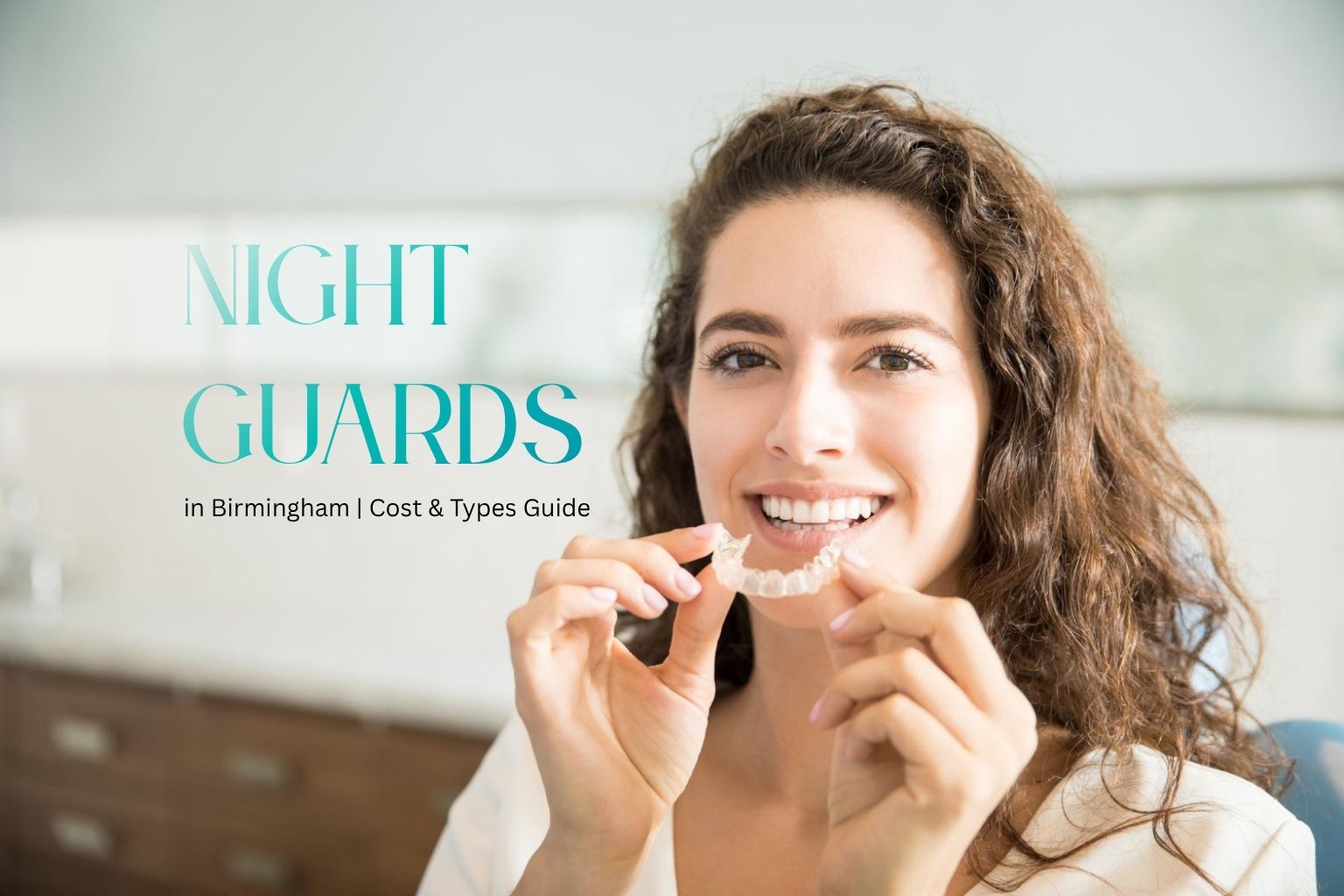
Night Guards in Birmingham: What They Cost, What Type to Get, and Whether You Even Need One
Woken up with a sore jaw lately? Or had someone tell you that you grind your teeth in your sleep loud enough to hear from the next room? That's usually what sends people searching for "night guard" — and what they find is a mess of NHS pages, dental clinic blogs, and online shops, all answering a slightly different question. This guide from Robinhood Dental Practice in Hall Green, Birmingham, tries to actually answer the whole thing: what a night guard is, whether you need one, what it really costs in the UK, and how to pick between the options without overspending or underprotecting your teeth.
So what is a night guard, exactly?
It's a thin appliance — custom-made or semi-custom — that sits over your upper or lower teeth while you sleep. All it really does is stop your top and bottom teeth meeting directly, so the force of grinding gets absorbed by the guard instead of your enamel, your fillings, or that crown you paid for three years ago.
You'll see it under a few different names depending on where you look: bite guard, dental guard, mouth splint, occlusal splint. Same thing. It's worth keeping it separate in your head from a sports mouthguard (gum shield), though — that's built thicker to absorb a one-off impact, not thousands of hours of grinding pressure spread across a year. People sometimes buy a sports guard for night-time use because it's cheaper at the pharmacy, and it just doesn't hold up the same way.
The underlying reason any of this matters is bruxism, the term for grinding or clenching your teeth, usually without realising you're doing it. Left alone for long enough, it chips and flattens teeth, damages existing dental work, and tends to bring jaw pain along with it.
Could you be grinding and not know it?
Most people only find out by accident — a partner mentions the noise, or a dentist spots the wear at a routine check-up. The usual giveaways:
- A partner telling you they can hear grinding at night
- Waking up with a tight or aching jaw
- Headaches in the morning, often around the temples
- Teeth that look flatter or more chipped than they used to
- Sudden sensitivity to cold drinks or food
- Earache with no obvious infection behind it
- Sleep that just doesn't feel restful, even after a full night
If a few of those sound familiar, it's worth getting it checked before you buy anything. Get the wrong type of guard for how badly you grind and it can genuinely make things worse — more on that further down.
Why people grind their teeth in the first place
There's rarely one single cause. Stress and anxiety come up more than anything else, and it's common for grinding to flare up during a particularly bad few weeks at work or a stretch of poor sleep. It's also closely tied to sleep disorders — snoring and obstructive sleep apnoea in particular, where disrupted breathing through the night seems to trigger jaw clenching as a side effect. Certain medications play a part too, SSRIs being the most commonly cited, along with recreational drug use, smoking, and heavier alcohol or caffeine intake. And some of it is just genetics — a few people are simply more prone to clenching, sometimes made worse by an uneven bite.
If stress is what's driving it for you, a guard protects your teeth but doesn't touch the actual cause. Worth raising with your GP alongside getting fitted — relaxation techniques, better sleep habits, or in some cases CBT, tend to do more for the grinding itself than the guard ever will.
The types, and which one's actually right for you
This is where most guides start glossing over things, but it's the bit that genuinely matters once you've worked out you need a guard at all.
| Type | Material | Best For | Comfort | Durability |
|---|---|---|---|---|
| Soft Guard | EVA (flexible), 1.5–3mm | Mild to moderate grinding, first-timers | Comfortable from the start | Wears through faster under heavy grinding |
| Hard Guard | Rigid acrylic, 1–2mm | Moderate to severe grinding or clenching | Takes a bit of getting used to | Holds up well long-term |
| Dual-Laminate (Hybrid) | Soft inner layer, hard outer shell | Most adults — the middle ground | Good balance | Generally good |
And then there's the question of how it's made. A custom guard, whether through a dentist or an online lab, is moulded from an impression of your actual teeth — the best fit by a wide margin, and really the only sensible option if you grind heavily or have crowns, veneers, or braces to protect. A boil-and-bite guard, the kind sold in pharmacies, gets softened in hot water and bitten into to create a rough shape — cheaper, faster, but the fit is approximate at best and it tends to need replacing sooner. Ready-made stock guards skip moulding entirely and come in a handful of standard sizes; fine if your grinding is mild and occasional, not something to rely on long-term.
At Robinhood Dental Practice we fit custom soft, hard and hybrid guards on-site in Hall Green — see our Mouth Guards page for what's involved.
What it actually costs in the UK
Almost every other article either dodges this question or buries it under "ask your dentist." Here's the real picture across the four main routes, as of 2026:
| Route | Typical Cost | What You're Getting |
|---|---|---|
| NHS (England) | Band 1 examination/impressions £27.90; custom-made guard usually Band 3 at £332.10 (NHS charges) | Only if your dentist judges it clinically necessary — one fixed charge per treatment course |
| Private Dentist (Custom) | Roughly £150–£400+ (£195 at Robinhood Dental Practice) | Lab-made in the UK from in-chair impressions, fitted and checked by your dentist |
| Online Custom Labs | Roughly £70–£170 | Self-impression kit or digital scan posted off, guard arrives by post — cheaper, but no in-person clinical check |
| Pharmacy / Online OTC | Roughly £10–£30 | Boil-and-bite or stock sizing, lowest cost and lowest precision |
A couple of things worth knowing that tend to get left out: the NHS will only fund a guard if it's clinically necessary, not just because you fancy one as a precaution. NHS charges also work per treatment course, not per item — so if a guard and another piece of treatment land in the same band, you're only paying once. And if you're under 18, NHS dental treatment, including a guard if one's needed, is free regardless of which band it falls under.
At Robinhood Dental Practice, we offer both NHS-eligible and private custom guards to patients across Birmingham and the surrounding areas, and we're happy to talk through which route makes sense for how badly you grind and what you'd rather spend — no pressure either way.
Getting fitted — what actually happens
It's broadly the same process whether you go through a dentist or an online lab. An impression gets taken first, either with soft putty or a digital scanner in the chair, or via an at-home kit if you're going the online route. That impression goes off to a lab, where a precise model of your teeth gets built and used to mould the guard itself — trimmed, polished, and checked against the model before it ever reaches your mouth. If a dentist is fitting it, they'll also check it sits properly and isn't pressing unevenly anywhere.
The thing that trips people up most isn't the lab work, it's the impression. If you're using an at-home kit, follow the instructions closely — particularly the bit about not biting all the way through the tray — because a bad impression produces a guard that no amount of lab skill can fix afterwards.
Looking after it (and how long it should last)
Rinse it with cool water before and after wearing it, and give it a gentle brush with a soft toothbrush and a bit of soap once a day — skip the toothpaste, since it can scratch the surface over time. Store it somewhere with airflow rather than sealed up while damp, and keep it well away from hot water or direct sunlight, both of which can warp it out of shape. Bring it along to your check-ups so your dentist can see how it's wearing and tell you when it's time for a new one.
A decent custom guard can last anywhere from six months to a few years, depending on how hard you grind and how well it's looked after. Soft guards tend to wear through quicker under heavy grinding than the harder or hybrid options; boil-and-bite and stock guards usually need replacing every few months regardless.
When a cheap guard does more harm than good
A guard that doesn't fit properly isn't just annoying to wear — it can cause real problems. An uneven bite against it can gradually shift individual teeth, put extra strain on the jaw joint and worsen TMJ pain rather than relieve it, or simply fall out overnight, which rather defeats the point. It's also common for a poor fit to wear through fast, so you end up paying repeatedly for something that was never quite right to begin with.
Even if you end up ordering a cheaper online guard, it's worth having at least one professional check first — partly to rule out a misaligned bite or sleep apnoea that a guard alone won't fix, and partly just to know you're not wasting money on the wrong fit.
It's not the only option
A night guard protects your teeth, but it doesn't necessarily stop the grinding itself. Depending on what's behind it, your dentist or GP might point you toward stress management or CBT where anxiety seems to be the driver, a medication review if an antidepressant looks like a contributor, treatment for sleep apnoea if that's the underlying issue (a different device to a standard night guard), or in more stubborn cases, Botox into the jaw muscles, which some private clinics offer for clenching that doesn't respond to a guard on its own. For most people though, a well-fitted guard plus addressing whatever's triggering the grinding — usually stress or poor sleep — covers it.
A few questions people usually have
Will the NHS pay for one?
Only if your dentist decides it's clinically necessary, usually charged as Band 3 (£332.10 in England from April 2026). Sports or purely cosmetic guards don't qualify. Under-18s get NHS dental treatment free.
Will it stop my snoring too?
Probably not. A standard bruxism guard just keeps your teeth apart — it doesn't push your jaw forward the way a dedicated snoring or sleep apnoea device does, even though some of them look similar at a glance.
Could it actually make grinding worse?
A good fit shouldn't, but a hard guard that doesn't sit right can sometimes get your jaw searching for a more comfortable position, which can mean more clenching, not less. Fit matters more than which material you pick.
What if it falls out overnight?
A properly fitted custom guard generally stays put. Loose or worn-out ones are far more likely to come out — one more reason the cheaper stock options underperform over time.
Should kids wear them?
Children grind their teeth fairly often as a normal part of jaw development, and it doesn't always need treating. If it's causing visible damage, see a dentist rather than reaching for an over-the-counter guard, since their teeth and jaws are still moving and changing shape.
Upper or lower — does it matter?
Most people find an upper guard sits more comfortably and securely, simply because it covers more surface area. Your dentist or lab will usually have a view based on your own bite.
Where that leaves you
A night guard is a relatively small cost against a problem that only gets more expensive — and more painful — the longer it's ignored. Which type makes sense depends mostly on how badly you grind and what you're willing to spend: a soft or hybrid custom guard from a dentist or a reputable online lab is the sensible middle ground for most adults, while a pharmacy boil-and-bite is fine only if your grinding is genuinely mild and occasional. If you're not sure which camp you're in, that's a five-minute conversation with a dentist, not a guess.
If you think you might be grinding your teeth, get in touch with Robinhood Dental Practice to book a check-up. We'll have a look at your teeth and bite, and if a guard turns out to be the right next step, we'll talk you through the NHS and private options and get you fitted.
Robinhood Dental Practice 1491 Stratford Rd, Hall Green, Birmingham, B28 9HT 0121 744 1484 · Book online Open Mon–Fri 8:30am–10pm, Sat 8:30am–8pm, Sun 9am–8pm
This article is general information, not a substitute for professional dental advice. See a dentist for an assessment before starting any treatment. NHS charge figures are for England from April 2026 and may differ in Scotland, Wales and Northern Ireland, or change in future years.