Last updated: October 31, 2026
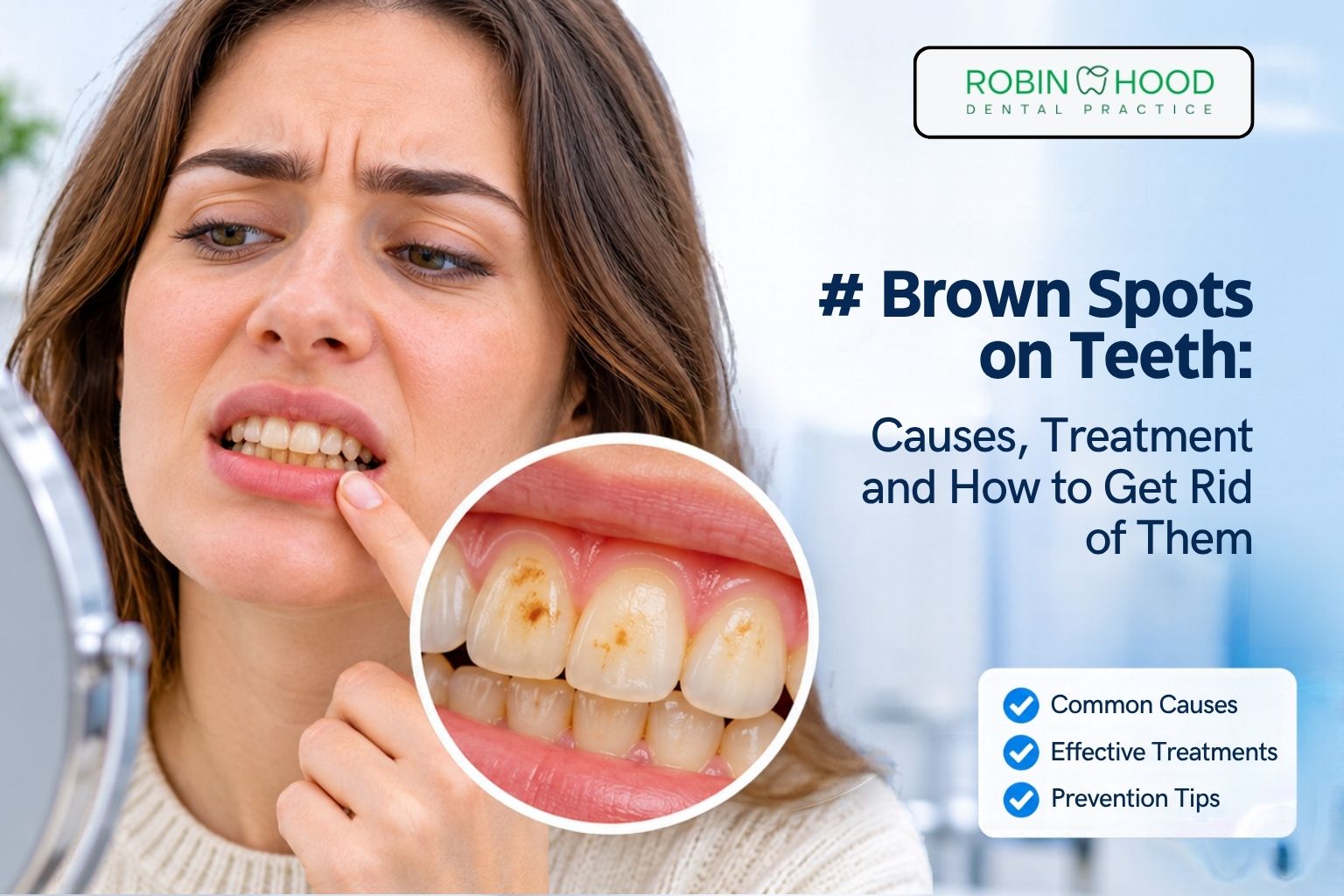
Brown spots on teeth are usually one of two things: harmless surface staining from tea, coffee or tobacco, or an early sign of tooth decay. You can't reliably tell which at home, because a stain and a cavity can look almost identical. That is why a brown spot on a tooth deserves attention, even when it doesn't hurt.
Staining can often be polished away. Decay needs treatment before it spreads, and a small patch of weakened enamel can become a hole, an abscess or a root canal if it's ignored.
This guide explains what causes brown spots on teeth, how to tell the difference, how to remove brown spots on teeth safely, and what treatment involves and costs in the UK.
Quick answer
- Not every brown spot is a cavity, but the NHS lists brown spots among the signs of decay, so don't assume a spot is only stain.
- You can't tell stain from decay by eye. A dentist can, using an examination and sometimes X-rays.
- Stain usually comes off with a professional clean. Decay needs fluoride treatment or a filling, and enamel defects have minimally invasive cosmetic fixes.
- Book a check-up if a spot is new, growing, on one tooth, or comes with pain, sensitivity or bleeding gums.
What are brown spots on teeth?
Brown spots fall into two groups. Surface (extrinsic) spots sit on the enamel, where pigment from food, drink or tobacco collects in tiny pits and rough patches. Internal (intrinsic) spots come from decay, an enamel defect or nerve damage, and no amount of brushing will shift them.
Spots range from pale tan to near black, as dots, lines or patches. Any brown spot on teeth that is dark, limited to one tooth or getting bigger deserves a closer look.
Are all brown spots on teeth cavities?
No. Many are stains, and some come from enamel that formed unevenly. But the NHS lists white, brown or black spots among the signs of decay, so don't assume a spot is cosmetic.
| Type | What it looks like | Usual cause | Usual fix |
|---|---|---|---|
| Surface stain | Light to dark brown, often on several teeth | Tea, coffee, smoking, tartar | Scale and polish |
| Early decay | Brown or black spot or groove, often on one tooth | Plaque acid and sugar | Fluoride treatment or a filling |
| Enamel defect | Symmetrical white-to-brown patches, sometimes pitted | Fluorosis, hypoplasia | Microabrasion, resin infiltration, bonding |
Decay can cause no symptoms at first, so a painless spot isn't reassuring. In practice, brown edges along the gumline of a tea drinker's lower front teeth are often tartar stain that a hygienist clears in one visit. A single new brown dot in a molar groove is different and worth getting checked.
What happens if a brown spot is decay?
Decay develops in stages, and the stage you catch it at decides the treatment and, on the NHS in England, the charge.
- Early enamel damage. Acid from plaque bacteria weakens the enamel, and the area can look white or brown. The NHS says a dentist can use fluoride varnish or mouthwash to reverse early decay. Applying fluoride falls under Band 1 (£27.90).
- A cavity. If the damage continues, a hole forms and you will probably need a filling (Band 2, £76.60).
- Infection reaching the pulp. Once decay reaches the soft tissue in the middle of the tooth, you may need root canal treatment, which is also Band 2.
- Abscess or extraction. A painful build-up of pus can form, and sometimes the tooth has to be removed.
If a crown is needed to rebuild a damaged tooth, the course of treatment moves into Band 3 (£332.10). Charges are per course of treatment, not per appointment, so catching a spot early is often the cheaper route as well as the gentler one. Band contents are listed in the Which? guide to NHS and private dental charges.
Common causes of brown spots on teeth
- Food, drink and tobacco. Tea, coffee, red wine, cola and smoking cause most surface staining.
- Plaque and tartar. Plaque left on teeth hardens into tartar, which absorbs stain and often looks brown, especially at the gumline. Once hardened, only a dental professional can remove it.
- Tooth decay. Bacteria in plaque produce acid that breaks down enamel. The NHS links decay to sugary food and drink and poor cleaning.
- Fluorosis. Too much fluoride while teeth form in childhood can leave white, yellow or brown mottling.
- Enamel hypoplasia and inherited conditions. Illness, infection or injury while a tooth is forming, or conditions such as amelogenesis imperfecta, can leave thin, discoloured enamel.
- Old fillings, root canals and trauma. Fillings can stain, and a dark rim around one may mean decay underneath. A knock or root canal treatment can darken a tooth from within.
- Medicines and ageing. Tetracycline antibiotics taken while teeth form can stain them, and a prescription chlorhexidine mouth rinse can cause brown marks. With age, enamel thins and darker dentine shows through.
- Coeliac disease. Enamel defects are sometimes linked to it, especially in children. Worth mentioning to your GP if several teeth are affected.
Brown spots on teeth near the gums and on back teeth
Brown spots on back teeth and near the gums share one problem: both areas are hard to clean, so plaque lingers.
Near the gums, a brown band is often plaque stain or tartar. It can also be decay at the neck of the tooth, especially where gums have receded and exposed the softer root surface. Bleeding or sore gums alongside the spot are a reason to book a check-up.
On back teeth, the chewing surfaces have deep grooves where food and bacteria collect. A brown line in a groove may be harmless staining or an early cavity, and you can't tell which by eye. Spots between teeth are hard to see without X-rays. Deep grooves can be sealed with a thin plastic coating called a fissure sealant, mostly used on children's back teeth.
How to get rid of brown spots on teeth at home
Home care can only remove brown spots on teeth that are surface stains. It can't shift decay or an enamel defect, so see a dentist first if a spot is dark, on one tooth or growing.
For staining, these help:
- Brush twice a day with fluoride toothpaste, and spit rather than rinse, as the NHS advises.
- Clean between teeth daily with floss or interdental brushes.
- Try a whitening toothpaste. It polishes surface stain but won't change your natural tooth shade.
- Cut back on tea, coffee, red wine and smoking, or rinse with water afterwards.
Avoid charcoal powders, lemon juice, apple cider vinegar and bicarbonate scrubs. They are abrasive or acidic, and worn enamel stains more easily. Over-the-counter whitening kits in the UK can legally contain only 0.1% hydrogen peroxide, too little to make a noticeable difference.
How dentists diagnose brown spots
A dentist can't diagnose a brown spot from a photo, and neither can you. In the surgery, the process usually has three parts:
- History. When the spot appeared, whether it has changed, and anything that could explain it, such as medicines, childhood fluoride, injuries or tobacco.
- Examination. A close look at the tooth, often with a gentle probe, to judge whether the surface is intact and whether the spot is stain, an enamel defect or decay.
- X-rays. These show decay between teeth and under fillings, where the eye can't reach, and how deep a spot goes.
Not every brown spot needs a drill. A small, stable spot may simply be monitored, stain needs only cleaning, and an enamel defect is often a cosmetic choice rather than a medical need.
Brown spots on teeth removal at the dentist
The right treatment depends on what the spot is.
| Treatment | Best for | Notes |
|---|---|---|
| Scale and polish | Surface stain, tartar | Quick, no drilling |
| Fluoride varnish or mouthwash | Early decay | Can reverse early decay, per the NHS |
| Filling | Cavities | NHS Band 2 in England |
| Microabrasion and resin infiltration | Fluorosis, hypoplasia, shallow marks | Minimally invasive; often private |
| Bonding or veneers | Stubborn or deeper discolouration | Cosmetic; often private |
| Professional whitening | Overall shade | Can't treat decay |
How the cosmetic options work. Microabrasion removes a very thin surface layer of enamel using a mild acid and a fine abrasive. Resin infiltration seals porous enamel with a thin, runny resin, which can make white and brown marks less noticeable. Bonding adds tooth-coloured resin over the spot, and veneers are thin ceramic shells that cover the front of the tooth. How deep the discolouration goes decides which option suits, and minimally invasive options are usually tried first.
Whitening is regulated: only GDC-registered dental professionals can legally carry it out, using up to 6% hydrogen peroxide, so avoid beauty salons.
Illegal whitening is a real risk. A 2025 BBC investigation, reported by Dentistry, found treatments burning gums and damaging teeth. Check any provider on the GDC register before you book.
On the NHS in England, from April 2026, a course of treatment costs £27.90 (Band 1, covering examinations, X-rays and a scale and polish if clinically necessary), £76.60 (Band 2, including fillings) or £332.10 (Band 3, including crowns). Charges differ in Scotland, Wales and Northern Ireland. The NHS covers treatment that is clinically necessary, so fluoride and fillings are covered, but purely cosmetic work such as whitening is private. Ask for a written estimate before you agree to any private treatment.
Brown spots on children's teeth
Brown spots on a child's teeth can be decay, an enamel defect or stain, so book a check-up rather than waiting to see if they fade. Decay in baby teeth is common, and enamel defects can follow an injury or infection while a tooth was forming. NHS dental treatment is free for children under 18, or under 19 in full-time education.
First permanent molars come through at around six and have pitted biting surfaces that are hard to keep clean. A trial summarised by NIHR Evidence found fluoride varnish and fissure sealants were similarly effective at preventing decay in these teeth in six- and seven-year-olds, so ask your dentist which they recommend.
When to see a dentist
Use this as a guide to how soon to act:
| What you notice | What to do |
|---|---|
| Facial swelling, a pimple on the gum or severe pain | Contact your dentist urgently or call NHS 111 |
| A new, growing or darkening spot, a spot on one tooth, sensitivity to hot, cold or sweet things, bad breath or bleeding gums | Book an appointment soon, even without pain |
| Brown staining across several teeth, no pain, and a heavy tea or coffee habit | Mention it at your next check-up so a dentist can confirm it's stain |
Don't wait for pain, because early decay often causes none. Dark patches on the gums, cheeks or tongue, rather than on a tooth, should also be examined.
What to tell your dentist
- When you first noticed the spot, and whether it has grown or darkened.
- Any pain, sensitivity or bleeding gums, even if mild.
- Medicines you take or took as a child, including antibiotics and prescription mouthwash.
- Past injuries or root canal work on that tooth, plus smoking, vaping and how much tea, coffee or red wine you drink.
How to prevent brown spots on teeth
- Brush twice daily with fluoride toothpaste and clean between teeth every day.
- Limit sugary food and drink, and keep them to mealtimes where you can.
- Rinse with water after tea, coffee or red wine, and don't smoke.
- Supervise children's brushing, using a smear of toothpaste under age 3 and a pea-sized amount from age 3, to lower fluorosis risk.
- Keep up regular check-ups. The NHS says to see a dentist if you haven't had a check-up for two years (one year if under 18).
FAQs
Can brown spots on teeth go away on their own?
Surface stains fade slowly if you stop what's causing them. Early decay can sometimes be reversed with fluoride treatment, though the spot may stay visible. Cavities and enamel defects don't disappear without treatment.
Can you get rid of brown spots on teeth overnight?
Only surface stains and tartar. A hygienist can clear these in one visit, but decay and enamel defects can't be removed overnight.
Will whitening remove brown spots on teeth?
It can lighten some stains but won't treat decay or even out patchy enamel. Only GDC-registered professionals can legally whiten teeth.
Do brown spots on teeth mean poor hygiene?
Not always. Tea, coffee, some medicines and enamel defects can all cause them, though poor cleaning does let plaque, tartar and decay build up.
Do brown spots on teeth near the gums mean gum disease?
Not necessarily. Plaque and tartar stain is a common cause. But if the gums around the spot are sore, swollen or bleed when you brush, see a dentist, as that can point to gum disease or decay.
Are brown spots on back teeth normal?
They're common, because the deep grooves trap plaque and stain. But a brown groove can also be early decay, so have it checked rather than assuming it's stain.
Can brown spots on teeth be a sign of something serious?
Usually they're stain or decay. Occasionally they point to another cause, such as coeliac disease affecting enamel, especially in children. Dark patches on the gums, cheeks or tongue, rather than on the teeth, should be examined.
Can I get brown spots on my teeth treated on the NHS?
Yes, if the treatment is clinically necessary. Fluoride treatment and fillings are covered, and a scale and polish is included when clinically needed. Purely cosmetic work, such as whitening, is private.
How much does it cost to treat brown spots in the UK?
In NHS England, a clinically necessary scale and polish falls under Band 1 (£27.90) and a filling under Band 2 (£76.60). Cosmetic options are private, and prices vary by practice.
Do brown spots come back after treatment?
Stains return if the habits behind them continue. Fillings and resin infiltration treat the spot, not its cause, so keep up daily cleaning and check-ups.
Conclusion
A brown spot is either a stain or a warning, and only an examination tells you which. Surface stains respond to better habits and a professional polish, decay needs a dentist before it grows, and enamel defects have conservative cosmetic fixes.
Next steps:
- Book a check-up if a spot is new, growing or on one tooth, or if you can't remember your last visit.
- Until then, brush with fluoride toothpaste, clean between teeth and skip abrasive DIY remedies.
- If it's only staining, ask about a scale and polish or whitening, and check your provider is on the GDC register.
Sources
- NHS: Tooth decay
- NHS: How much will I pay for NHS dental treatment?
- NHS Business Services Authority: NHS dental charges
- Which?: Private vs NHS dental charges
- General Dental Council: Tooth whitening
- Oral Health Foundation: Tooth whitening and the law
- NIHR Evidence: Chlorhexidine mouthwash
- NIHR Evidence: Fluoride varnish and fissure sealants in children