Last updated: October 27, 2026
What is a dental crown?
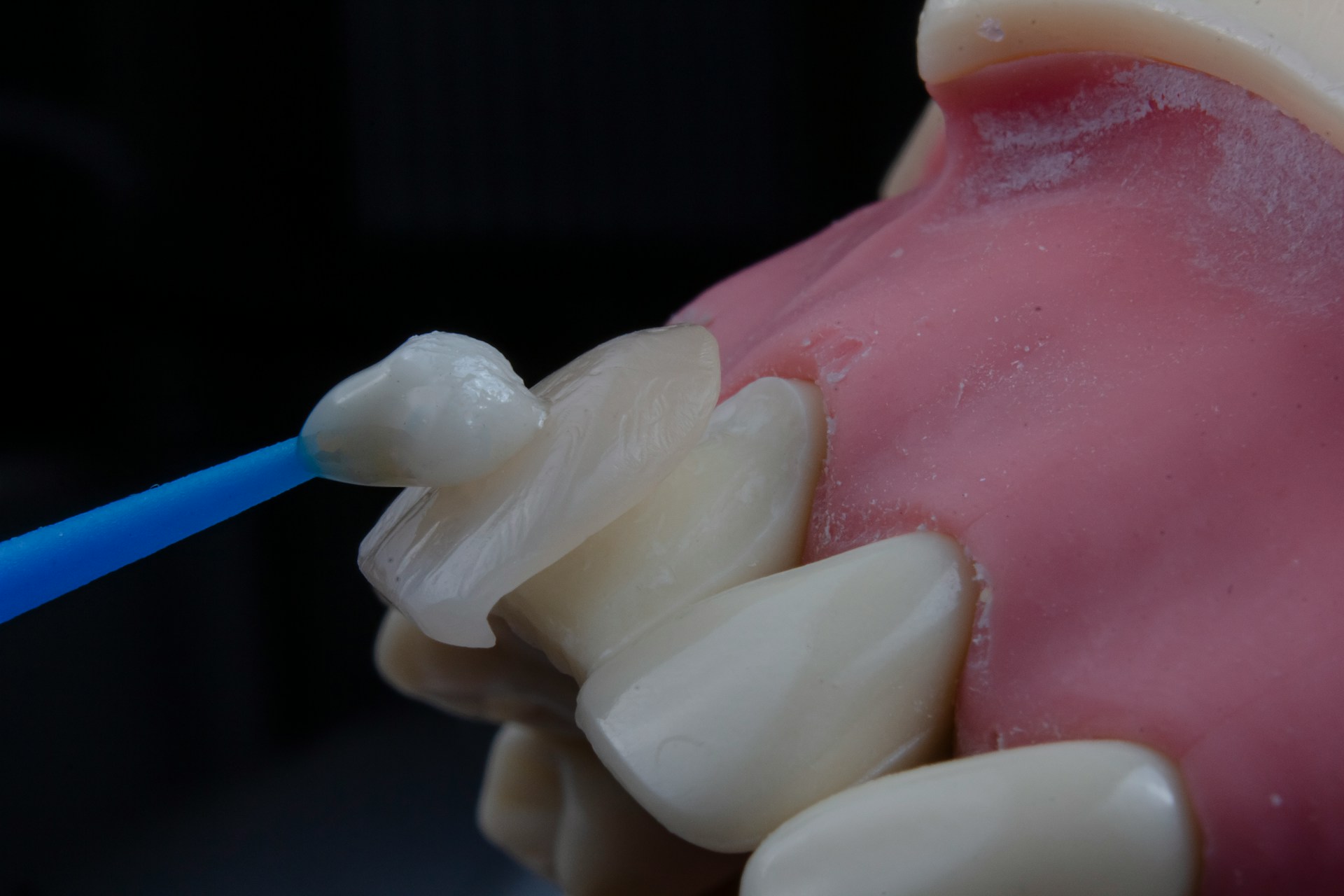
A dental crown is a custom-made, tooth-shaped cover that fits over a damaged tooth and replaces the visible part of it above the gum line. It restores the tooth’s shape, strength and appearance. Dentists use crowns for teeth that are broken, badly worn or heavily decayed, for teeth with large fillings that can no longer hold, for teeth after root canal treatment, and to finish a dental implant. Many people call a crown a “cap”.
Most people meet the word “crown” in the dentist’s chair. A molar has cracked, or an old filling has failed for the second time, and the dentist explains that another filling will not hold. That is usually the moment people start asking what a crown involves, what it is made of and what it will cost.
This guide answers those questions in the order they tend to come up: what a crown does, when you need one, how it differs from a filling or veneer, the types of crown, what happens at each appointment, the cost on the NHS and privately, and how to make a crown last.
Dental crowns at a glance
| Appointments | Usually two, about two weeks apart. A temporary crown protects the tooth in between. |
|---|---|
| Anaesthetic | Local anaesthetic, so shaping the tooth should not hurt. |
| Reversible? | No. The tooth is permanently reshaped to fit the crown. |
| How long it lasts | Typically around 8 to 10 years with good care. Many last longer; none last for life. |
| NHS cost (England) | Band 3, £332.10, paid once for the whole course of treatment. |
| Private cost at Robinhood | £495 metal, £595 porcelain fused to metal, £695 zirconia or e.max. |
What a crown actually does
A tooth has a hard outer layer of enamel, a softer layer of dentine beneath it, and a centre called the pulp that holds the nerve and blood supply. When decay or a fracture removes enough of the outer structure, the tooth loses the strength it needs to take chewing forces.
A filling plugs a hole. A crown works more like a sleeve: it wraps the whole tooth so that biting force is spread around the outside instead of pushing the remaining walls apart. That is why a heavily filled tooth, whose thin walls are already weakened, often does better with a crown than with a bigger filling.
A crown also does three smaller jobs. It seals a root-filled tooth from the mouth, it restores the shape of the tooth so your bite and your neighbouring teeth stay in balance, and it can improve the look of a discoloured or misshapen tooth.
When do you need a dental crown?
Dentists usually recommend a crown in these situations:
- A large cavity or a failing large filling. When most of the biting surface or one of the corners (cusps) of the tooth is gone, a filling has too little tooth to grip.
- A cracked or broken tooth. A crown holds the pieces together and protects them from splitting further. A crack that reaches below the gum or into the root may mean the tooth cannot be saved.
- After root canal treatment. A root-filled tooth is more fragile, so a crown is often placed to protect it. If you are weighing up a root canal, see our root canal cost guide.
- Severe wear. Grinding or acid erosion can wear teeth down until they are short, sensitive or flat.
- Cosmetic reasons. A crown can cover a badly discoloured or misshapen tooth when a less invasive option will not work.
- On top of a dental implant. The crown is the visible tooth that attaches to the implant.
Signs that a tooth may be heading towards a crown include pain when you release a bite, a tooth that keeps breaking or losing filling material, or a filling that has been replaced more than once. Only an examination and an X-ray can tell you for certain.
Crown, filling, onlay or veneer: which does what?
| Option | What it covers | Best when | Trade-off |
|---|---|---|---|
| Filling | The cavity only | Enough healthy tooth remains around the repair | Does not reinforce a weak tooth |
| Onlay | The biting surface and cusps, not the whole tooth | Moderate damage, with strong walls left | Not suitable if the walls are very thin |
| Crown | The whole tooth above the gum | Extensive damage, a cracked tooth, or a root-filled tooth | Removes more tooth than any other option |
| Veneer | The front surface of a tooth | Cosmetic changes to a tooth that is otherwise sound | Not designed to hold a broken-down tooth together |
If you are deciding between a crown and a veneer for a front tooth, our guide to dental crowns vs veneers compares them directly.
Types of dental crown
The material matters more than most people expect, because it affects how strong the crown is, how natural it looks and how much of your tooth the dentist has to remove.
| Type | What it is | Strengths | Limits | Robinhood price |
|---|---|---|---|---|
| Metal (including gold alloy) | A solid metal crown | Very hard-wearing; usually needs less tooth removed | Visibly metallic, so mainly used on back teeth | £495 |
| Porcelain fused to metal (PFM) | A metal shell with a porcelain outer layer | Strong, with a tooth-coloured surface | The porcelain can chip; a dark metal line can show at the gum over time | £595 |
| All-ceramic (zirconia, lithium disilicate or e.max) | Ceramic throughout, with no metal | The most natural appearance; no metal | Can need more tooth removed; usually private | £695 |
| Resin or acrylic | A plastic crown | Inexpensive | Wears and fractures easily, so used as a temporary crown | Temporary use |
| Stainless steel (preformed) | A ready-made metal crown for baby teeth | Quick and durable for children | Not used for adult teeth | Children’s treatment |
What the evidence says about materials
A large 2015 systematic review of single crowns, covering more than 14,000 crowns, found that about 95 in 100 metal-ceramic crowns were still in place after five years. Most types of all-ceramic crown performed similarly, on both front and back teeth. Two details stand out. Crowns with a zirconia core covered in porcelain suffered more chipping of the porcelain layer and came loose more often than metal-ceramic crowns, and some older glass-based ceramics did worse on back teeth.
That research is a decade old and materials have moved on, so treat it as a guide to the questions worth asking, not a ranking. Where the tooth sits and how hard you bite matter as much as the material. A back tooth under heavy chewing load, or a tooth belonging to someone who grinds, puts different demands on a crown than a front tooth that is mainly on show.
NHS or private: which materials are on offer?
On the NHS in England, crowns are a Band 3 treatment with a fixed charge. The crown materials offered are usually metal or porcelain fused to metal, and all-ceramic crowns are typically private, though practices differ. NHS treatment covers what is clinically necessary, so a crown chosen purely for appearance is normally a private option.
The crown procedure, step by step
- Assessment and X-ray. The dentist checks the tooth, the gum and your bite, and takes an X-ray to see the root and the bone. This is also when you should be offered the alternatives, such as a filling or an onlay, so you can agree to the treatment knowingly.
- Preparing the tooth. After local anaesthetic, any decay is removed and the tooth is reshaped all the way round to make room for the crown. If a lot of tooth is missing, a filling-like build-up may be placed first to give the crown something to grip.
- Impression or scan. A mould or digital scan records the shape of your prepared tooth and how it meets the opposite teeth. The shade is matched to your neighbouring teeth.
- Temporary crown. A temporary crown, usually acrylic, covers the tooth while the permanent crown is made. It is not as strong as the final crown, so treat it gently.
- The laboratory stage. A dental laboratory makes the permanent crown from your impression or scan. This usually takes around two weeks.
- Fitting. The temporary crown is removed and the new crown is tried in. The dentist checks the fit, the colour and your bite. Once you are both happy, it is cemented into place.
- Review. A follow-up check confirms that the crown feels comfortable and the gum around it is healthy.
Some practices can make a crown in a single visit using in-house scanning and milling. Most use a laboratory and two appointments. Ask which your practice offers, and what each means for the material and fit.
What the preparation takes away
The step that surprises people is the reshaping. To make room for a crown, the tooth is reduced on all sides, and that cannot be undone. How much comes off depends on the tooth and the material. This is the main reason a crown should not be your first choice for a tooth that a smaller repair could save, and why you should ask about alternatives before agreeing.
Does it hurt?
The injection is the part most people notice. Once the tooth is numb, the preparation should not hurt. When the numbness wears off, expect tenderness in the tooth and gum for a few days. A tooth that still has its nerve may be sensitive to hot and cold while the temporary crown is in place.
Benefits and limits of a dental crown
| What a crown does well | What a crown cannot do |
|---|---|
| Holds a cracked or weakened tooth together | Stop decay from starting at its edge, where the crown meets your tooth |
| Protects a root-filled tooth from fracture | Make a tooth with too little healthy structure savable |
| Restores chewing function and tooth shape | Be reversed once the tooth has been shaped |
| Improves the appearance of a discoloured or misshapen tooth | Change colour with whitening treatment |
| Can last many years with good care | Last a lifetime |
Risks worth knowing about
- Sensitivity. Some teeth are sensitive to hot, cold or biting pressure after a crown. It often settles, but sensitivity that lingers or worsens should be checked.
- Root canal treatment. A small percentage of crowned teeth need root canal treatment because the nerve was already damaged or does not recover from the preparation. Where it happens, it often shows up before the crown is permanently cemented.
- Decay at the edge. The tooth under the crown can still decay, and the gum around a crown collects plaque easily.
- Chipping or loosening. Porcelain can chip, and a crown can work loose. Both are among the usual reasons crowns are replaced.
- Gum recession. In people with thin gums, the gum can pull back and expose the edge of the crown or a darker band of root.
How long do dental crowns last?
NHS patient information from Leeds Teaching Hospitals says a properly cared-for crown should normally last around 8 to 10 years, and that crowns may need replacing several times in a lifetime. The five-year survival figure from the systematic review above, around 95 in 100 for metal-ceramic crowns, points the same way: most crowns do their job for years, and a minority fail early.
What decides which group you fall into:
- Cleaning at the gumline. The edge where crown meets tooth is where decay and gum disease take hold.
- Grinding and clenching. Heavy bite forces chip porcelain and loosen cement. A night guard protects a crown if you grind.
- The tooth underneath. A crown on a sound, well-supported tooth lasts longer than one on a tooth with little left.
- The material and the tooth’s position. Back teeth take more load than front teeth.
- The quality of the work. The skill of the dentist and the laboratory affects the fit, and a good fit is what keeps decay out.
How much does a dental crown cost in the UK?
On the NHS
In England a crown is a Band 3 treatment, currently £332.10. You pay the Band 3 charge once for the whole course of treatment, so an examination, a filling and a crown in the same course cost £332.10 in total. Children’s NHS dental care is free.
Privately
Private fees are not regulated. Published prices across the UK commonly run from roughly £400 to £800 depending on the material and the practice. At Robinhood Dental Practice in Hall Green, a metal crown is £495, a porcelain-fused-to-metal crown is £595 and a zirconia or e.max crown is £695. These are “from” prices, and you receive a quote for your own tooth after the examination, before any treatment starts. Our dental crown cost guide has the full breakdown.
What to ask a quote to include
- The temporary crown
- The laboratory fee
- Any build-up needed under the crown
- A root canal, if the tooth needs one first
- The review appointment, and what happens if the crown needs remaking
Three realistic examples
| Situation | What may be involved | Robinhood price from |
|---|---|---|
| A back molar with a large failing filling and a sound nerve | One crown | £495 to £695 |
| A molar that needs root canal treatment and then a crown | Root canal, then a crown | £595 + £495 = £1,090, up to £595 + £695 = £1,290 |
| A chipped front tooth with plenty of healthy tooth left | Composite bonding may be enough; a crown if the damage is extensive | £320 per tooth for bonding, or £695 for an all-ceramic crown |
These are starting points, not quotes. Your dentist will confirm what your tooth needs after examining it.
Aftercare: looking after a temporary and a permanent crown
| Stage | What to expect | What to do |
|---|---|---|
| While the temporary crown is in | It is weaker than the final crown and can feel sensitive | Chew on the other side, avoid sticky or hard foods, and slide floss out sideways instead of pulling it up so the crown is not lifted off. Call the practice if it comes off or breaks. |
| First few days after fitting | Some tenderness in the gum and tooth; the bite may feel slightly different | Eat normally once the numbness has gone. If the crown feels high when you bite, go back so it can be adjusted. |
| Long term | The crown lasts as long as the tooth and gum underneath it stay healthy | Clean carefully at the gumline every day, use interdental brushes or floss, use a fluoride toothpaste, and keep up regular check-ups. |
Avoid using crowned teeth to chew ice, crack nuts or open packaging. If you wake with a stiff jaw or know that you grind your teeth, ask about a night guard (from £195 at Robinhood), because grinding chips crowns and loosens the cement.
When to call the dentist
Call the practice the same day if a crown comes off or breaks, if sensitivity or pain is getting worse instead of settling, or if you have a swollen gum, a bad taste or a fever. If swelling spreads across your face or makes it hard to breathe or swallow, call 999 or go to A&E.
Common mistakes with dental crowns
- Choosing the material on price alone. The best material depends on the tooth, your bite and whether you grind.
- Skipping the alternatives conversation. Ask whether a filling or an onlay would do, because shaping the tooth for a crown cannot be undone.
- Leaving the temporary crown too long. It is not built to last, and an exposed or loose tooth can decay or crack while you wait.
- Assuming a crown cannot decay. The tooth underneath still can, so gumline cleaning matters more after a crown, not less.
- Ignoring grinding. If you clench or grind, tell your dentist before the crown is made, because it affects the material and the case for a night guard.
- Not asking what the quote includes. A low headline price can leave out the temporary crown, the laboratory fee or a root canal.
Crowns for children and for implants
Children. Baby back teeth with decay are often treated with a preformed stainless steel crown. In the Hall technique the crown is fitted over the tooth without drilling or injections, and it usually stays in place until the baby tooth falls out. NHS dental care is free for children in England.
Implants. A dental implant replaces the root, and a crown on top replaces the visible tooth. The same material choices apply as for a natural tooth, and the implant and its crown are usually planned together.
Questions to ask before you agree to a crown
- Why is a crown better than a filling or an onlay for this tooth?
- How much of my tooth will be removed?
- Which material do you recommend for this tooth, and why?
- Does the tooth need a root canal first, and what would that add to the cost?
- What does the quote include, and what happens if the crown needs remaking?
- How many appointments will it take?
- How long should it last, and what would shorten that?
- Should I have a night guard?
Dental crown FAQs
What is a dental crown made of?
Crowns are made from metal alloys (including gold), porcelain fused to metal, all-ceramic materials such as zirconia and lithium disilicate (e.max), or resin for temporary use. Crowns for children’s baby teeth are usually preformed stainless steel. The right material depends on the tooth, your bite and how visible the tooth is.
Is a dental crown the same as a cap?
Yes. “Cap” is the everyday word for a crown. Both describe a cover that fits over the whole visible part of a tooth.
Does getting a dental crown hurt?
The tooth is numbed with local anaesthetic, so shaping it for the crown should not hurt. Some tenderness around the tooth and gum for a few days afterwards is normal, and a temporary crown can feel sensitive to hot and cold.
How long does it take to get a crown?
Most crowns need two appointments, usually around two weeks apart while a laboratory makes the permanent crown. Some practices can make a crown in a single visit, so ask whether yours does.
How long do dental crowns last?
With good care, a crown typically lasts around 8 to 10 years according to NHS patient information, and many last longer. A large systematic review found that about 95 in 100 metal-ceramic crowns were still in place after five years. Crowns do not last a lifetime and may need replacing.
Can a tooth decay under a crown?
Yes. The tooth underneath is still a natural tooth, and decay can start at the edge where the crown meets the tooth. Thorough cleaning at the gumline and regular check-ups protect it.
Can I whiten a dental crown?
No. Crowns do not change colour with whitening treatment. If you plan to whiten your natural teeth, do it before the crown is made so the shade can be matched to the result.
Does the NHS cover dental crowns?
Yes, when a crown is clinically necessary. In England a crown is a Band 3 treatment, currently £332.10, and you pay once for the whole course of treatment. The materials offered on the NHS are usually metal or porcelain fused to metal, and all-ceramic crowns are typically private.
How much does a crown cost privately?
Private fees are not regulated and vary by practice and material. At Robinhood Dental Practice a metal crown is £495, a porcelain-fused-to-metal crown is £595 and a zirconia or e.max crown is £695. Ask what a quote includes, such as the temporary crown and laboratory fee.
Is a crown better than a filling?
Neither is better in general. A filling is the least invasive way to repair a small or moderate cavity. A crown is for a tooth that is too broken down for a filling to hold or protect, because it covers and holds the whole tooth together. Your dentist should recommend the smallest treatment that will last.
Do I need a root canal before a crown?
Not always. A tooth with a healthy nerve can be crowned without one. Crowns are often placed after root canal treatment to protect a root-filled tooth. Occasionally a tooth needs root canal treatment after a crown because the nerve does not recover from the original damage or the preparation.
What if my crown comes loose or falls out?
Keep the crown safe and call your dentist promptly. If the crown and the tooth underneath are undamaged, the crown can often be re-cemented, from £75 at Robinhood. Do not leave the tooth exposed for long, because it can decay or crack.
Key takeaways
- A crown is a custom-made cover for the whole visible part of a tooth. It protects a weakened tooth, where a filling only repairs a hole.
- Most crowns need two appointments, with a temporary crown in between, and shaping the tooth cannot be reversed.
- Metal, porcelain fused to metal and all-ceramic crowns each have trade-offs. The right choice depends on the tooth and your bite.
- Crowns typically last around 8 to 10 years and many last longer, but the tooth underneath can still decay.
- On the NHS a crown is Band 3 at £332.10 in England. Privately, ask what the quote includes before you compare prices.
- Gumline cleaning, regular check-ups and a night guard if you grind are what make a crown last.
Next step
If a tooth has broken, an old filling keeps failing or your dentist has mentioned a crown, an examination and X-ray is the first step. At Robinhood Dental Practice, 1491 Stratford Rd, Hall Green, Birmingham, B28 9HT, a new patient examination is from £25 and an X-ray from £10. You get a quote for your own tooth after the examination, before any treatment starts. Book online or call 0121 744 1484. We welcome new patients.
If you have constant pain, facial swelling, a fever or a knocked-out tooth, do not wait for a routine slot: call us today, or NHS 111 outside our opening hours.
Sources
- Sailer I et al. All-ceramic or metal-ceramic tooth-supported fixed dental prostheses? A systematic review of the survival and complication rates. Part I: Single crowns. Dental Materials, 2015
- Manchester University NHS Foundation Trust: Crowns, veneers and bridges (patient information)
- University of Bristol Dental School: Dental crowns (patient information)
- Wirral Community Health and Care NHS Foundation Trust: Stainless steel crowns using the Hall technique
- Oxford Health NHS Foundation Trust: Fixing your tooth with a shiny crown
- Leeds Teaching Hospitals NHS Trust: patient information on crowns and veneers
- NHS: What is included in each NHS dental band charge
- Robinhood Dental Practice: prices
This guide is general information, not a diagnosis or a substitute for advice from a dentist. If you are unsure how urgent a problem is, call NHS 111. In a life-threatening emergency, call 999.