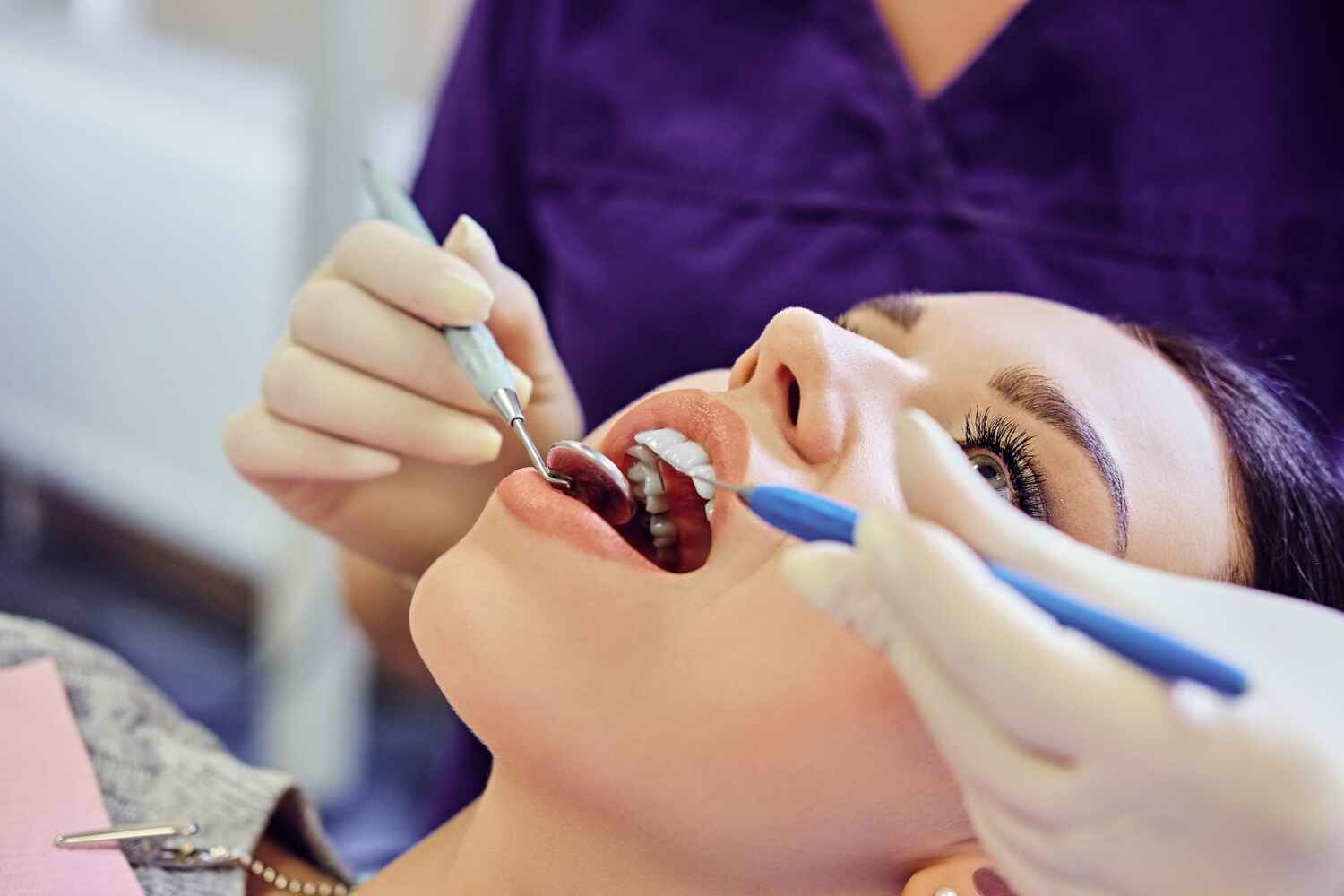
"Does that mean I'm going to be in agony?" That's more or less the first thing patients say once they hear the words "root filling." It's one of the most feared phrases in dentistry, and it really doesn't deserve the reputation it's got. A root filling — root canal treatment, if you want the proper term — is normally done to get someone out of pain, not put them into it. Below is what the treatment involves, what it costs around Birmingham, and what the days afterwards actually feel like, written the way we'd explain it to someone sitting in our chair at Robinhood Dental Practice in Hall Green.
A root filling, or root canal treatment, removes infected or damaged tissue from inside a tooth's root canal, then cleans, disinfects and seals the space so the tooth can be saved rather than removed. It's carried out under local anaesthetic, so patients feel pressure rather than pain, and it's usually completed in one or two appointments.
The root filling journey, step by step:
- Book an appointment — tell us what you're feeling so we can judge how urgent it is
- Exam and X-ray — confirms whether the nerve's involved and maps the shape of the canal
- Local anaesthetic — the tooth is fully numbed before anything else starts
- Clean and seal — infected pulp removed, canal cleaned and filled
- Temporary or permanent filling — tooth closed up while things settle
- Crown, if needed — usually fitted a couple of weeks later
- Review appointment — an X-ray checks the bone around the root is healing as expected
Tooth Still Throbbing?
Waiting won't make an infected nerve heal on its own. Book your £25 New Patient Examination today and get a clear X-ray, an honest assessment, and transparent root canal pricing — before it gets worse.
What's Actually Going On Inside the Tooth
A root filling removes infected or damaged tissue from inside the root of a tooth, then cleans, disinfects and seals that space so the tooth can be kept rather than taken out.
Underneath the hard outer layer of a tooth sits a soft core — the pulp — packed with tiny nerves and blood vessels. Bacteria don't get anywhere near it under normal circumstances. Deep decay changes that. So does a cracked tooth, or a filling that's started leaking round the edges. Once bacteria reach the pulp, it becomes infected, and that infection doesn't sort itself out on its own. Left alone, it spreads down through the root and into the bone underneath. That's usually when things start hurting properly.
The confusing part for a lot of patients is the name. "Root filling" sounds like it should mean a filling on top of the tooth, the way a normal cavity filling works. It isn't. The canal running down through the root gets filled, not the visible part you can see in the mirror — which is why the tooth can look completely untouched from the outside once it's done.
Why the Nerve Gets Damaged in the First Place
Deep decay is the one we see most in practice — a cavity that's been left long enough to reach the nerve, often without much warning beforehand. Cracked teeth cause it too, sometimes from grinding at night, sometimes from biting down on something without expecting resistance, like a stone in an olive. A knock to the mouth can damage the pulp years after the event, even when the tooth never visibly cracked at the time.
Old fillings and crowns play a part as well. If the seal round one starts to fail, bacteria work their way in underneath, hidden from view, and it's easy for that to go unnoticed until there's pain or a dentist spots it on X-ray. Here's the thing that catches people out: the pulp can die quietly, without much pain at all. The tooth just darkens a shade, or a small bump appears on the gum. That's part of why regular check-ups matter even when nothing's actually bothering you.
Signs Worth Getting Looked At
Toothache that throbs, particularly when biting down, tends to be the first thing patients notice. Sensitivity to hot or cold that lingers well after the drink or food is gone is another — a couple of seconds is fine, thirty seconds isn't. Swelling or tenderness around one specific tooth, a small spot on the gum that comes and goes, a tooth that's started looking darker than its neighbours — all of these are worth mentioning at your next appointment, or sooner. We see patients from across Hall Green, Solihull, Shirley, Moseley, Kings Heath, Acocks Green and Yardley with exactly these symptoms most weeks.
Call us today if you notice:
- Swelling in the face or gum
- A fever or feeling generally unwell
- A bad or persistent taste in the mouth
- Difficulty swallowing or opening your mouth fully
Facial swelling, a temperature, or trouble swallowing alongside any of that isn't a wait-and-see situation. It points to infection that's spreading, and it needs to be seen the same day — that's exactly the kind of case our emergency dentist Birmingham team deals with regularly, rather than something to book in for next week.
Can I Just Wait a Few Weeks?
Patients ask this a lot, usually hoping the answer's yes. It isn't, really. An infected nerve doesn't heal on its own — there's no immune response that can reach it once it's sealed inside the tooth. Waiting doesn't make the problem smaller, it just gives the infection longer to spread into the surrounding bone, which is when a straightforward root filling can turn into something more complicated, or in a worst case, a lost tooth. NICE guidance on dental pain is consistent on this point: persistent or worsening tooth pain warrants assessment rather than watchful waiting. If the pain's mild and comes and goes, a couple of days to get an appointment booked is generally fine. If it's constant, keeping you up at night, or you're swelling up, that's not a few-weeks situation.
Does a Root Filling Hurt?
No, not during the procedure. Local anaesthetic numbs the tooth beforehand, so you'll feel pressure rather than pain. A few days of mild tenderness afterwards is normal.
This question comes up before we've even said hello, most days. The fear is understandable — root canal treatment has carried a bad reputation for decades, based largely on techniques that stopped being standard practice a long time ago. With proper anaesthetic, patients often describe it as feeling like a long filling appointment, not much more dramatic than that. If we're honest, the reaction we hear most afterwards is surprise at how uneventful it was compared to what they'd braced themselves for.
In the first 24 hours, once the anaesthetic's worn off, some ache is normal as feeling comes back — similar to how a tooth feels after a deep filling. Taking a painkiller before the numbness fully wears off, rather than waiting until it starts throbbing, tends to keep that first evening more comfortable.
What can follow over the next few days is soreness around the tooth and gum. That's really just the tissue that was already inflamed before treatment settling back down — normal healing, not a sign something's gone wrong. Root filling pain after treatment should trend downward day by day. By the one-week mark, most patients aren't thinking about the tooth at all. If it's still sore a week on, rather than gradually easing, that's not typical — it's worth getting it checked rather than assuming it'll settle by itself, since it can mean the infection hasn't fully cleared or the bite on a new filling needs a small adjustment.
What Happens in the Chair
A root filling takes one or two visits, somewhere between 45 and 90 minutes each. Front teeth go quicker. Molars with several canals take longer. The dentist examines the tooth first and takes an X-ray to see the shape of the canal and how far any infection has spread. The area gets numbed properly before anything else starts. A thin rubber sheet, called a dam, goes round the tooth to keep it clean and isolated while work's being done.
From there, a small opening is made in the top of the tooth to reach the canal. Fine instruments remove the damaged pulp and shape the space inside. The canal gets flushed with an antibacterial solution to deal with anything still lurking, then filled with a material called gutta-percha and sealed. Finally, the tooth is closed up — sometimes with a standard filling, sometimes with a crown, depending on how much natural tooth is left and which tooth it is.
A mix-up we see fairly often: patients think the whole tooth is being hollowed out. It isn't. Only the canal itself is touched.
Root Filling and Ordinary Filling Aren't the Same Thing
It's easy to lump the two together when you're weighing up teeth filling vs root canal treatment, given the word "filling" shows up in both. They're solving entirely different problems though.
| Aspect | Standard Filling | Root Filling |
|---|---|---|
| What it treats | Decay that hasn't reached the nerve | Infection or damage inside the nerve itself |
| What's removed | Decayed tooth structure | Infected pulp from inside the root canal |
| When it's needed | Cavity caught before it reaches the nerve | Nerve already infected, inflamed, or dying |
| Pain during treatment | Minimal, sometimes no anaesthetic needed | None, but full anaesthetic is used throughout |
| Anaesthetic | Sometimes, often minimal | Always, and more thorough |
| Time in the chair | 20–40 minutes, one visit | 45–90 minutes, sometimes two visits |
| Recovery | Little to none, back to normal same day | A few days of mild tenderness is common |
| Typical lifespan | Several years, depends on wear | Often decades, especially with a crown |
| Follow-up needed | None | Often a crown afterwards |
| Typical private cost | £80–£175 | £395–£950 |
Patients are sometimes told they need "a filling" over the phone by a receptionist relaying a diagnosis second-hand, then arrive expecting twenty minutes and leave two hours later having had a root canal. Worth asking directly which one it is before the appointment, if there's any doubt.
What Changes on the X-Ray
An infected tooth often shows a dark patch at the tip of the root before treatment — that's where infection has eaten into the bone around it. It's frequently the clearest sign of what's actually going on, sometimes clearer than the symptoms a patient's describing. Once the root filling's done and the infection's cleared, that dark patch heals gradually over the following months. Follow-up X-rays check that healing's happening the way it should.
Once the tooth's restored, there's nothing to tell it apart from the others, either by eye or by feel. We've had patients forget which tooth was treated within a year.
Root Canal Before and After
Looking at a root canal before and after side by side, the difference isn't really visual — it's how the tooth behaves. Before treatment, there's usually pain, sensitivity, or swelling, and the X-ray often shows infection sitting at the tip of the root. After treatment, that infection is cleared, the pain settles, and the bone around the root starts to heal, even though none of that is visible just by looking in the mirror.
| Before Treatment | After Treatment |
|---|---|
| Throbbing pain, often worse when biting | Pain resolves within days as inflammation settles |
| Lingering sensitivity to hot or cold | Sensitivity fades once the nerve tissue is removed |
| Possible swelling or a gum boil | Swelling reduces gradually over one to two weeks |
| Dark shadow at root tip on X-ray | Shadow shrinks over several months as bone heals |
| Tooth may feel loose or "high" when biting | Bite feels normal once restoration is fitted |
Full bone healing on X-ray can take anywhere from a few months to around a year, which is why we like to see patients back for a review appointment rather than assuming everything's fine just because the symptoms have gone. Symptom relief tends to happen fast — often within days — but the underlying healing in the bone is slower, and that's normal.
What It Costs in Birmingham
Privately, root canal treatment in the UK generally runs from around £300 to £900 with a general dentist, higher for complex molars or specialist care.
At Robinhood Dental Practice, our current prices are:
| Treatment | Price |
|---|---|
| Root Canal — Incisor | £395 |
| Root Canal — Premolar | £495 |
| Root Canal — Molar | £595 |
| Root Canal requiring a microscope / beyond scope of a general dentist | £750 |
| Re-Root Canal Treatment (retreatment) | £950 |
| New Patient Examination (needed before treatment) | £25 |
| X-Ray | £10 |
| Crown after root filling (Metal / PFM / Zirconia) | £495 – £695 |
The gap in pricing comes down to complexity. A front tooth has one canal, generally, and sits toward the lower end of that range. A molar can have three or four, each one needing to be found, cleaned and sealed on its own — which is why they cost more and take longer in the chair. Retreating a tooth that's already had a root filling costs more again, because the old filling material has to come out before the canal can even be cleaned properly.
Patients often ask why the price isn't fixed the way a filling is. It's because no two canal systems are identical — a dentist genuinely can't confirm the price until they've seen the X-ray. For a wider breakdown of pricing across different teeth, our root canal cost guide covers this in more depth.
Robinhood Prices Against the Wider UK Market
It helps to see how that sits against what other UK practices charge, since prices vary a fair bit by region and by whether you're seeing a general dentist or a specialist endodontist.
| Route | Typical UK Private Range | Robinhood Dental Practice |
|---|---|---|
| General dentist, incisor (front tooth) | £300 – £700 | £395 |
| General dentist, premolar | £500 – £800 | £495 |
| General dentist, molar | £600 – £1,200 | £595 |
| Specialist / microscope, beyond scope of general dentist | £600 – £1,500+ | £750 |
| Retreatment (re-root canal) | £700 – £1,200+ | £950 |
Molar root canals cost more elsewhere mainly because of the extra canals and chair time involved; our pricing reflects the same complexity but stays within a single published range rather than a tooth-by-tooth sliding scale. Where a case looks unusually complex on X-ray, we'll always confirm the exact fee before starting rather than after.
NHS or Private?
Root canal treatment is available on the NHS under Band 2, currently £76.60 in England. Private treatment costs more but tends to mean shorter waits.
| Factor | NHS | Private |
|---|---|---|
| Cost | Fixed Band 2 charge | £395–£950, depending on the tooth |
| Waiting time | Can be longer, especially for molars | Often within days |
| Appointment length | Standard NHS slot | Longer, less rushed |
| Choice of dentist | Limited to available NHS dentists | You can choose who treats you |
Root filling NHS treatment isn't means-tested the way some NHS services are — anyone registered with an NHS dentist can have it, and a few groups, including under-18s and pregnant women, don't pay the charge at all. The Band 2 fee covers root canal treatment on any tooth, alongside fillings and extractions under the same banding. If a crown's needed afterwards, that moves the course of treatment into Band 3, which carries a higher charge.
Waiting times vary a fair bit depending on the practice and how far ahead they're booking, and getting registered with an NHS dentist in the first place can take longer in some parts of Birmingham than others. Some NHS practices refer complicated molar cases on to a specialist endodontist too, which can push the wait out further still. That's the reason most patients give us for going private — when a tooth's throbbing at 2am, waiting on a referral isn't really an option.
Pain After the Appointment
Mild to moderate soreness for two or three days is normal and settles with ibuprofen or paracetamol. Pain that's getting worse, or still there after a week, needs a call to your dentist.
Biting on the treated tooth can feel tender for the first few days. That's the area that was inflamed before treatment finally calming down, and it should ease steadily rather than staying flat or getting worse. What isn't normal: pain that ramps up, swelling that spreads, a bad taste suggesting the infection hasn't fully cleared. Don't wait that out — call the practice.
The thing patients underestimate is how quickly it usually settles. A day or two, and most forget they had anything done, until they see the crown appointment reminder.
Recovery, Roughly Day by Day
| Timeframe | What to expect |
|---|---|
| First 24–48 hours | Numbness wears off; biting on that tooth may feel tender |
| Days 2–4 | Discomfort eases; painkillers usually enough if needed |
| First 1–2 weeks | Best to avoid hard food on that side, especially before the permanent restoration goes in |
| 2–4 weeks | Crown or permanent filling fitted, if it wasn't done the same day |
| Ongoing | Tooth works as normal; check-ups keep an eye on healing |
In practice, that means chewing on the other side for a bit and sticking to softer food while things settle. Keep brushing and flossing as you normally would — just gently round the treated tooth. Take painkillers if needed. And actually turn up to the follow-up appointment for the permanent filling or crown. A tooth left with only a temporary filling for months is a common reason patients end up back in the chair sooner than they should — the temporary seal wasn't built to last that long. Straightforward root canal aftercare like this is most of what determines whether a treated tooth lasts decades or needs revisiting.
How Well It Works, and What Can Go Wrong
Quick facts:
| Treatment time | 45–90 minutes per visit |
| Appointments needed | 1–2 |
| Typical recovery | 2–5 days |
| Long-term success rate | 85–95% |
Long-term success rates sit somewhere between 85% and 95%, based on most published studies. That's not a guarantee. A root-filled tooth is also more brittle than one with its nerve intact — which is exactly why molars and premolars so often get crowned afterwards, to stop them cracking under everyday chewing pressure.
| Possible Issue | How Common |
|---|---|
| Mild tenderness after treatment | Common |
| Swelling | Less common |
| Reinfection needing retreatment | Uncommon |
| Tooth fracture (without a crown where needed) | Uncommon over time |
| Instrument fragment separating in canal | Rare |
Canals that are unusually curved or partly calcified can be genuinely difficult to clean fully, even for an experienced dentist. Very rarely, a tiny fragment of instrument can break off inside the canal during treatment, though modern equipment has made that uncommon.
Skipping the crown to save money is a mistake we see more than we'd like. The tooth can survive fine for a year, sometimes two, then split under normal biting force — and by then, extraction is often the only option left.
Reducing the Chances You'll Need One
Not every root filling is avoidable — a knock to the mouth or a tooth that cracks on something hard can happen to anyone. But a good number of the cases we see could have been caught earlier, before the nerve was ever involved.
- Keep up with check-ups. Decay that's caught while it's still small is dealt with a normal filling. Left another year or two, the same decay can reach the nerve.
- Get leaking fillings and crowns sorted promptly. A failing edge lets bacteria in underneath, often with no pain at all until the nerve's already infected.
- Wear a night guard if you grind. Grinding puts repeated stress on teeth that can eventually crack them, particularly molars.
- Wear a mouthguard for contact sports. A knock to a front tooth can damage the nerve even when the tooth looks fine afterwards.
- Don't ignore lingering sensitivity. Sensitivity that fades in a couple of seconds is usually nothing. Sensitivity that lingers is worth a check before it becomes a root filling.
None of this guarantees you'll never need one. It does shift the odds — and it means that if you do need treatment, it's more likely to be caught early, when it's simpler and more predictable to treat.
Root Filling or Extraction?
A root filling saves the tooth; extraction removes it for good. Where a tooth can realistically be saved, root canal treatment tends to work out cheaper over time than losing the tooth and replacing it later.
| Factor | Root Filling | Extraction |
|---|---|---|
| Outcome | Natural tooth kept | Tooth gone, gap left behind |
| Chewing | Stays as it was | Neighbouring teeth can shift, affecting bite |
| Cost now | £395–£950 | £110–£195 |
| Cost later | Usually just the crown (£495–£695) | Replacement often needed — implant from £2,500, bridge, or denture |
| Appearance | Unchanged | Visible gap unless replaced |
There are cases where extraction genuinely is the right call — a tooth fractured below the gumline, say, or a canal system that can't be cleaned adequately no matter what. See our tooth extraction cost page for pricing on that route. But where saving the tooth is realistic, that's what most dentists recommend, and once patients see the numbers on replacing a missing tooth down the line, most agree.
When a Root Filling Isn't Possible
Root canal treatment can't save every tooth, and it's worth being upfront about that rather than pretending otherwise. A vertical root fracture — a crack running down through the root itself — usually means the tooth can't be saved, since there's no way to seal a crack like that from the inside. The same goes for a tooth that's split in two, or one where decay's destroyed so much structure that there isn't enough healthy tooth left to build a restoration on top of. In these situations, extraction genuinely is the better option, and your dentist should tell you that plainly rather than attempting treatment that's unlikely to hold.
Where a tooth can't be root filled, or a patient would rather not go ahead with it, the realistic alternatives are: extraction and leaving the gap, extraction with a replacement (implant, bridge, or denture), or in a small number of cases, referral to a specialist endodontist for a more complex retreatment attempt before extraction is considered. Monitoring without treatment isn't really an option once a nerve's infected — the British Endodontic Society's position, in line with most UK dental guidance, is that infected pulp doesn't resolve on its own.
Will You Need a Crown?
Back teeth do most of the work when you chew, and once the nerve's gone, they lose some of their natural give. That's why molars and premolars are crowned after a root filling so often, particularly if a fair amount of the tooth was already lost to decay beforehand. Front teeth carry less biting force and keep more of their original structure, so a standard filling to close the access hole is sometimes all that's needed. Your dentist will know which applies once treatment's finished and they can see exactly how much healthy tooth remains — see our dental crown cost page for current pricing.
Questions Patients Ask Us
What is a root filling?
A treatment that removes infected or damaged tissue from inside a tooth's root canal, then cleans and seals that space so the tooth can stay in your mouth rather than being removed.
Does a root filling hurt?
Not during the procedure, since local anaesthetic numbs the tooth beforehand. A couple of days of mild soreness afterwards is fairly common and settles with normal painkillers.
How much does a root filling cost in the UK?
Privately, expect somewhere around £395–£595 for most teeth, with retreatment closer to £950. NHS treatment is a fixed Band 2 charge, currently £76.60.
Is root filling available on the NHS?
Yes, covered under Band 2 charges, though molars and more complex cases can mean a longer wait than going private.
How long does recovery take?
A few days, for most. Soreness tends to fade within 2–3 days, and the permanent restoration usually goes in within a couple of weeks.
Can a root filling save a tooth?
That's really the point of the treatment. Success rates sit around 85–95%, so most who have it keep the tooth long-term.
How long does a root filling last?
Often decades, especially finished off with a crown where needed. No dental treatment comes with a lifetime guarantee, but a well-done root filling tends to hold up.
Can I eat after a root filling?
Once the numbness has gone, yes — but stick to softer food and avoid chewing on that tooth until any temporary filling's been swapped for a permanent one.
Do I need a crown afterwards?
Often, particularly on back teeth, since a root-filled tooth is more prone to cracking without the extra support a crown gives. Front teeth sometimes just need a normal filling.
Is a root filling better than extraction?
In most cases, yes — keeping your own tooth avoids the extra cost and hassle of replacing it later, and it keeps your bite exactly as it was.
Where This Leaves You
The reputation root canal treatment carries hung around long after the reasons for it stopped being true. For most patients, it's a fairly routine way to stop pain and keep a tooth that would otherwise have to come out. Toothache that won't settle, sensitivity that lingers, swelling near a tooth — none of that improves by waiting. Treatment caught early tends to be simpler, more comfortable, and more likely to succeed than treatment left until an infection's already spread.
If you're dealing with persistent tooth pain, swelling, or think you might need root canal treatment, book in with our team at Robinhood Dental Practice in Hall Green, Birmingham. We see patients from across Solihull, Shirley, Moseley, Kings Heath, Acocks Green and Yardley too — we'll take a look, get an X-ray, and talk through the best way to save the tooth.
Robinhood Dental Practice, 1491 Stratford Road, Hall Green, Birmingham B28 9HT. Tel: 0121 744 1484. Open 7 days a week.
About the reviewer: Dr Mudasir is the Principal Dentist at Robinhood Dental Practice, with over 20 years' experience in general and restorative dentistry. He has a particular interest in endodontic treatment, including root canal therapy on complex and previously treated teeth, and has been treating patients across Hall Green and the wider Birmingham area since the practice's early years. He's supported by Dr Rehman and hygienists Babita and Mia.
Medical disclaimer: This article is for general information only and doesn't replace a proper clinical examination or advice from a qualified dentist. Every case is different — please book an appointment before making treatment decisions. If you have swelling, difficulty breathing or swallowing, or a high fever, seek urgent medical attention straight away.
External references: NHS – Root Canal Treatment | General Dental Council