A calm, practical guide for UK patients — what's normal, what to watch for, and how long recovery really takes.
The tooth's out. The gauze is still in, your cheek feels twice its normal size, and the anaesthetic hasn't fully worn off yet. In amongst all that, one question tends to push everything else aside: is this normal?
It's the question we hear more than any other after an extraction, and it doesn't have a one-line answer — because "normal" changes from one day to the next. Swelling that would be worrying on day seven is entirely expected on day two. A twinge of pain that's manageable on day one can feel sharper on day three, for reasons that have nothing to do with anything going wrong. This guide walks through tooth extraction healing day by day the way we'd talk you through it in the chair. We'll cover what to expect in the first 24 hours, how the socket changes over the following weeks, and the handful of signs that mean it's worth ringing the practice rather than waiting it out.
Quick answer: Most simple extractions feel considerably more comfortable within 7 to 10 days, and the gum surface usually closes over within about two weeks. Surgical extractions and wisdom teeth generally take four to six weeks to settle. Underneath the gum, the jawbone continues to remodel for three to six months — you won't notice this part happening, but it's still going on long after the surface looks healed.
What Actually Happens When a Tooth Is Removed
Before getting into the healing itself, it helps to know what your dentist did while you were in the chair. A tooth extraction means lifting the tooth out of its socket in the jawbone, usually under local anaesthetic so the area is completely numb. For more complex cases — impacted wisdom teeth, or patients who are especially anxious — some private practices offer sedation, which keeps you relaxed without putting you fully to sleep.
The moment the tooth is out, extracted tooth healing begins as your body gets to work. A blood clot after extraction begins forming in the empty socket within minutes. This clot matters more than most patients realise: it seals off the bone and nerve endings underneath, and it becomes the scaffold that new tissue grows across. Protecting it is really the entire point of the first few days of aftercare. If it comes away too early, the bone is left exposed — a painful complication known as dry socket, which we'll come back to.
If your gum needed a stitch or two to close, these are often the dissolvable type, which loosen and disappear on their own within a week to ten days. You'll be given aftercare instructions before you leave the practice. It's worth actually reading them rather than filing them in a coat pocket — most of the questions patients call back about are already answered there.
The First 24 Hours
The first day is entirely about protecting that clot. You'll leave with gauze biting down over the socket. Keep firm, steady pressure on it for 30 to 45 minutes, then check whether the bleeding has slowed before deciding whether you need a fresh piece.
Some light bleeding or pink-tinged saliva is expected for up to 24 hours. The numbness from the anaesthetic typically wears off within two to four hours, and once it does, a dull soreness around the site is normal. What surprises a lot of patients is how little pain there actually is at this stage, compared to what they'd braced themselves for. The discomfort usually builds gradually rather than hitting all at once.
For these first 24 hours: no rinsing, no spitting, no using a straw, and no smoking. Each of those creates suction or disturbance that can dislodge the clot. Stick to soft, cool food, keep your head slightly propped up when you rest, and let the area do its work undisturbed.
Recovery Day by Day (Days 1–7)
If you're after tooth extraction healing day by day, this is it — exactly what to expect from the morning after your appointment through to the end of the first week.
Day 1
By the following morning, the clot should be firmly settled, though a little oozing is still nothing to worry about. Swelling generally hasn't peaked yet — that comes later — but the area will already feel puffy. Some patients notice light bruising on the cheek or jaw, particularly after a more involved procedure like a wisdom tooth removal. This is a sensible point to start pain relief properly, rather than waiting until discomfort sets in. Alternating ibuprofen and paracetamol, taken as directed on the packaging or as your dentist advised, works well for most adults.
Day 2
This is usually the stage where swelling becomes most noticeable, and it can look more alarming than it feels. The puffiness is simply your immune system sending fluid and repair cells to the area — a normal, necessary part of healing rather than a sign of infection. A cold compress against the outside of the cheek, 15 minutes on and 15 minutes off, keeps it manageable. If your dentist has said it's safe to do so, a gentle warm salt water rinse can also start from around this point. Let the water sit and fall out on its own rather than swishing it around.
Day 3
One thing that catches people out is that day three often feels worse than day one, not better. It's a question we get asked constantly, and there's a real physiological reason for it. The initial numbness and adrenaline from the procedure have fully worn off by now, and inflammation inside the tissue is at its peak. Any throbbing at this point is usually still controllable with the same over-the-counter painkillers. Stitches, if you have them, should still be in place. Keep going with soft food and try to chew on the opposite side.
Day 4
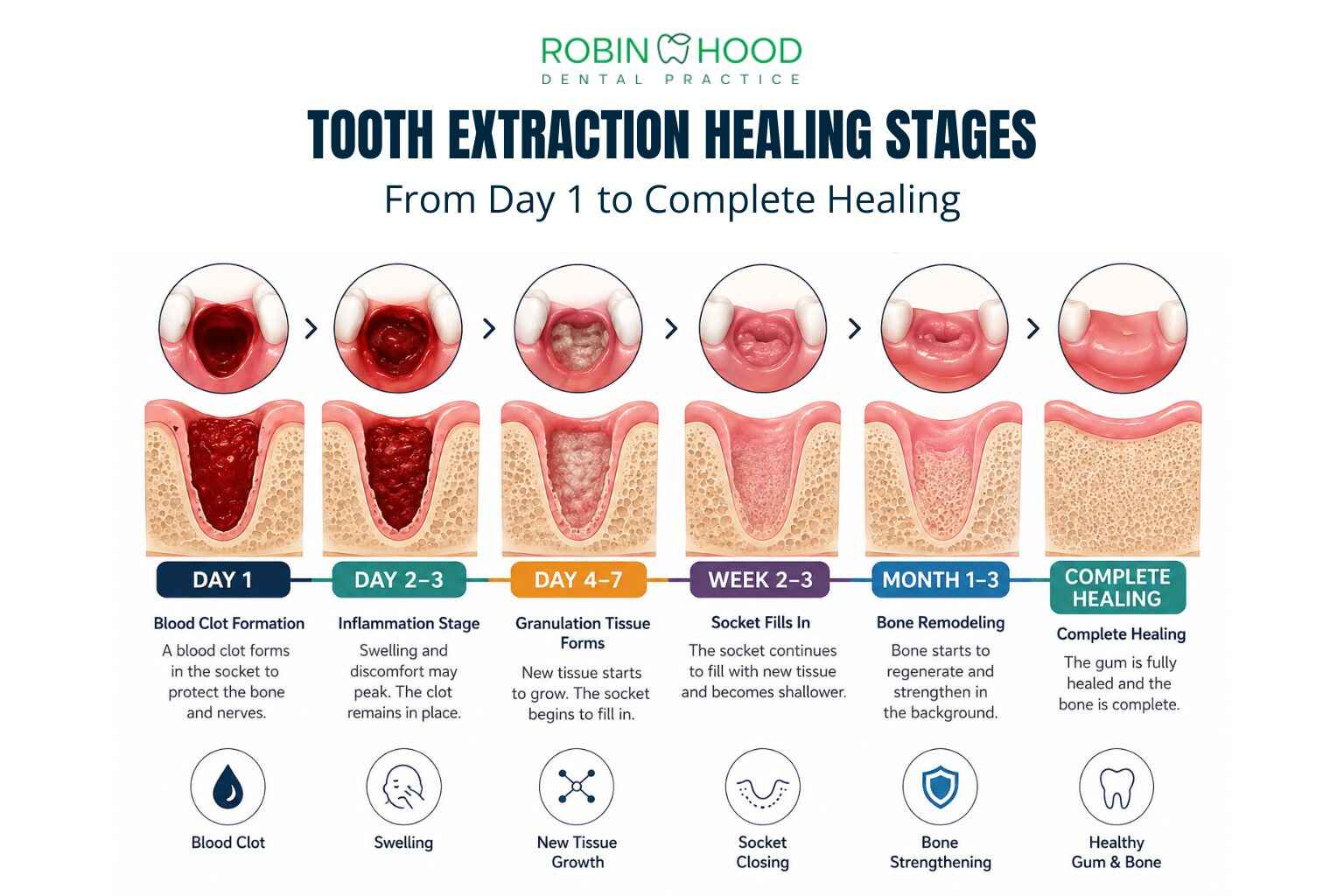
Most people notice the turning point around now — swelling starts to reduce rather than build, even if some jaw stiffness lingers, especially after a longer procedure. You might also spot a whitish or creamy-coloured film inside the socket. This white tissue after extraction is granulation tissue, new tissue forming as part of healthy healing, not a sign of infection — a distinction that's worth knowing, because it looks alarming if you're not expecting it. If you want a visual reference, tooth extraction healing pictures around this stage typically show a similar pale film across the socket.
Day 5
The risk of dry socket drops sharply once you're past day three, as socket healing is usually well underway by this point, though it isn't zero. If pain suddenly spikes and painkillers stop touching it, that's worth a call to the practice rather than waiting to see. For most patients, though, day five simply continues the steady improvement that started a day or two earlier.
Day 7
One week out is a genuine milestone for simple extractions. Most of the sharper symptoms have faded, the socket looks pink rather than raw, and it's usually closing at the surface. Dissolvable stitches, if fitted, will often have gone by now. Most patients can return to a fairly normal diet from here, though it's still sensible to avoid anything hard or crunchy directly over the site until the gum has fully knitted together.
Tooth Extraction Recovery Timeline: What Happens Each Day
A quick reference for what to expect during the first week of healing.
| Day | What's Happening | Key Signs | What To Do |
|---|---|---|---|
| Day 1 | Clot is settling, swelling begins | Slight oozing is normal, some bruising may appear | Start pain relief (alternate ibuprofen and paracetamol) |
| Day 2 | Swelling is at its most noticeable | Puffiness is a normal immune response, not infection | Cold compress (15 mins on/off); warm salt water rinse if advised |
| Day 3 | Often the toughest day | Numbness/adrenaline has worn off, inflammation peaks | Continue painkillers, stick to soft food, chew on the other side |
| Day 4 | Turning point — swelling starts to reduce | Whitish/creamy film in socket (normal granulation tissue, not infection) | Leave the socket undisturbed, healing continues |
| Day 5 | Dry socket risk drops sharply | Sudden pain spike is a warning sign | If pain suddenly worsens, contact your dentist |
| Day 7 | One-week milestone | Socket looks pink, closing up, dissolvable stitches usually gone | Resume a fairly normal diet, still avoid hard/crunchy food over the site |
Healing Week by Week
Two Weeks
Gum healing after extraction is usually complete at the surface by this point, with the gum line fully closed over the socket. Daily life is largely back to normal, even if there's the odd twinge when you press directly on the area. Non-dissolvable stitches, if you had them, will have been removed by your dentist by now.
Four Weeks
The surface looks fully healed at this stage. What isn't visible is that the jawbone underneath is still filling in gradually — a slower process called bone remodelling that continues well beyond what the eye can see.
Six Weeks and Beyond
By six weeks, most patients have more or less stopped thinking about the extraction altogether. Bone healing carries on quietly for several more months — molar sockets in particular, being larger, tend to take a little longer than a front tooth. If a dental implant is on the cards, this is often around the point your dentist starts assessing whether the bone is ready.
The Biology: Healing Stages Explained
Looking at recovery by the calendar is useful day-to-day, but it helps to understand tooth extraction healing stages happening in the tissue underneath — because that's what actually explains why symptoms rise and fall the way they do.
| Stage | Timing | What's Happening |
|---|---|---|
| Haemostasis | 0–24 hours | Clotting seals the socket and protects the exposed bone and nerve endings underneath. |
| Inflammation | Days 1–4 | White blood cells clear bacteria and debris — this is what causes the swelling, redness and warmth around the site. |
| Proliferation | Days 3–14 | Granulation tissue and new blood vessels fill the socket; the gum tissue begins closing across the surface. |
| Remodelling | Weeks 2 – Month 6 | The bone reshapes and strengthens beneath a fully closed gum surface. This stage takes the longest and isn't outwardly visible. |
Tooth extraction healing stages pictures are worth a look alongside this table. Comparing your own socket against reference photos for each stage is often the quickest way to tell whether what you're seeing — a whitish film, some light bruising, a pink gum gradually closing over — matches what's expected at that point, rather than something to worry about. If you'd rather not rely on searching online, your dentist can do the same comparison for you at a follow-up.

Simple vs Surgical Extraction: How Recovery Differs
Not every extraction recovers at the same pace. A simple extraction — a tooth that comes out in one piece with minimal manipulation — heals faster than a surgical extraction. That's one where the gum has been opened, or the tooth removed in sections, as is common with wisdom teeth. Wisdom tooth healing generally takes a little longer than a simple extraction for exactly that reason — the procedure itself is more involved, not because anything has gone wrong.
| Extraction Type | Gum Healing | Bone Healing | Feels "Back to Normal" |
|---|---|---|---|
| Simple extraction | 1–2 weeks | 4–6 weeks | 2–3 weeks |
| Surgical / wisdom tooth | 2–4 weeks | 3–6 months | 4–6 weeks |
| Molar removal | 2–3 weeks | 6–8 weeks | 3–4 weeks |
Dry Socket: Signs, Causes and Treatment
Dry socket — the clinical term is alveolar osteitis — is the most common complication after an extraction, though it doesn't affect most patients. It happens when the protective blood clot is dislodged or breaks down before the tissue underneath is ready. That leaves bone and nerve endings exposed to air, food and bacteria.
Signs of dry socket: pain that starts or sharply worsens two to four days after extraction, often radiating up into the ear or jaw; a persistent bad taste or smell; and sometimes visible bone in the socket. The defining feature is that it doesn't respond to ordinary painkillers the way normal post-extraction soreness does.
Smoking, using a straw, vigorous rinsing, and spitting all raise the risk, because each one can disturb the clot before it's stable. If dry socket does happen, treatment is straightforward: your dentist cleans the socket and places a medicated dressing that soothes the exposed nerve. Most patients feel significant relief within a day or two, though the dressing may need changing every few days until the area has properly re-covered.
Could It Be Infected? Signs to Watch For
Infection is less common than dry socket, but it's worth knowing the difference, because the two are sometimes confused. Infection tends to show up a little later and comes with a different set of signs.
- A raised temperature or general feeling of being unwell
- Swelling that keeps increasing after day four, rather than settling
- Yellow or green discharge from the socket
- A bad taste that persists rather than fading
- Worsening pain that spreads to the jaw or ear
If any of these appear, don't wait it out — contact your dentist or GP. Treatment usually involves antibiotics and sometimes cleaning out the socket to remove debris.
Aftercare Checklist
Good aftercare in the first few days makes a bigger difference to how comfortably you heal than almost anything else here.
- Rest for the first 24 hours; avoid strenuous exercise for 48–72 hours
- Keep your head elevated when lying down to reduce swelling
- Use a cold compress for the first day or so
- Take painkillers as directed rather than waiting for pain to build
- Stick to soft foods for at least three days
- Avoid smoking and alcohol for a minimum of 72 hours
- Don't rinse or spit forcefully for the first 24 hours
- Brush other teeth normally from day one, but stay gentle near the socket
- Keep any follow-up appointment your dentist schedules
- Stay hydrated, but skip straws until the socket has closed
What to Eat (and What to Avoid)
Easy on the socket
Mashed potato, yoghurt, scrambled eggs and lukewarm soup are all good choices in the first few days. Porridge, soft pasta, avocado and cottage cheese work well too — as do smoothies, eaten with a spoon rather than sipped through a straw.
Best avoided until healed
Crisps, nuts, seeds, chewy or sticky sweets, spicy food, very hot drinks and alcohol are all best left until later, along with anything that needs a lot of chewing. All of these either irritate the socket or risk lodging debris inside it. Most patients can return to a fairly normal diet from around day seven, though very hard or crunchy foods are worth avoiding directly over the site until the gum has fully closed.
Normal vs Concerning: Symptom Checker
| Symptom | Normal | Worth Calling the Dentist |
|---|---|---|
| Bleeding | Light oozing for 12–24 hours | Heavy bleeding continuing past 24 hours |
| Swelling | Peaks day 2–3, improves by day 5 | Still increasing after day 4 |
| Pain | Manageable with painkillers | Severe, worsening, or radiating |
| Bruising | Mild, on cheek or jaw | Spreading widely or very dark |
| Numbness | Fades within 2–4 hours of the procedure | Persists beyond 24 hours |
| Taste/smell | Mildly off for a day or two | Foul, persistent, with pain |
| Discharge | None, or a little clear fluid | Yellow, green, or pus-like |
| Temperature | Normal | Any fever |
| Jaw movement | Mild stiffness for 3–5 days | Locking, or can't open mouth after day 5 |
What Does an Extraction Cost in the UK?
Under the NHS in England, a routine extraction falls under Band 2 treatment, which costs £76.60. That's a single charge covering the whole course of care — whether it's one extraction or several, plus any fillings needed at the same time. Patients who are exempt, including under-18s, pregnant women, and those on qualifying benefits, pay nothing. Complex cases are sometimes referred to a hospital oral surgery department, where NHS treatment remains free.
Privately, prices vary more widely. A straightforward extraction typically runs from around £100 to £250, while a surgical extraction — including most wisdom teeth — tends to fall between £200 and £600 depending on complexity. Sedation adds further to the cost where it's used. At Robinhood Dental, we'll always confirm the exact cost for your specific case before any treatment begins.
Do You Need to Replace the Tooth?
Not every gap needs filling, but leaving one for too long can let neighbouring teeth drift, which sometimes affects your bite over time. There are three main routes if replacement makes sense for you:
Dental implant — a titanium post placed into the jawbone and topped with a crown. It's the closest thing to a natural tooth, and the option that best preserves the bone. It usually means waiting three to six months after extraction for the socket to heal enough to support it.
Dental bridge — uses the teeth either side as anchors for a false tooth. Faster than an implant, though it does mean trimming down otherwise healthy teeth.
Partial denture — removable, and the most affordable of the three, though it takes some getting used to day-to-day.
Your dentist is best placed to weigh these against your bone health, budget and how the gap affects your bite.
When to Call an Emergency Dentist
Contact an emergency dentist or your GP urgently if you notice:
- Bleeding that won't stop after four hours of firm pressure with gauze
- Pain that medication doesn't touch
- A temperature above 38°C
- Difficulty breathing or swallowing
- Swelling spreading towards the eye or neck
- Numbness lasting more than 24 hours
- Signs of an allergic reaction to medication
Most practices keep same-day slots free for exactly this kind of concern — it's always better to call and be told it's nothing than to sit at home wondering.
Tooth Extraction Recovery — FAQs
How long does bleeding last after a tooth extraction?
Light oozing for 6 to 12 hours is normal, tapering off within 24 hours. Heavy bleeding that's still going after four hours of firm gauze pressure needs a call to the practice.
How many days of bed rest do I need after a tooth extraction?
Full bed rest usually isn't necessary. The first 24 hours matter most — rest with your head slightly elevated and skip anything strenuous. Most people return to light daily activity after a day or two, though heavier exercise is best avoided for 3–4 days (closer to a week after wisdom tooth removal), since raising your heart rate can dislodge the clot.
Can I brush my teeth after a tooth extraction?
Yes — brush your other teeth from day one, just stay gentle around the extraction site for the first 24 hours. From day two, you can carefully clean around the area with a soft brush and light strokes, avoiding direct contact with the clot until it's more established.
I accidentally rinsed my mouth after tooth extraction — should I worry?
A single gentle rinse usually isn't a cause for concern — it's vigorous swishing or spitting that puts the clot at risk, not a light rinse. Watch for increased bleeding or a sudden spike in pain over the next day or two, and call your dentist if either happens.
When does swelling peak, and how long does it last?
Swelling usually peaks on day two or three, then steadily reduces from day four. Most of it is gone by day seven, though full resolution — especially after wisdom tooth removal — can take up to 10–14 days. Swelling that's still building after day four is worth flagging to your dentist.
How do I know a tooth extraction is healing properly?
Steady, day-on-day improvement is the best sign. Discomfort typically peaks around day three and eases from there. If symptoms are getting worse rather than better at any point, book a check rather than wait.
Is ear pain after a tooth extraction normal?
Mild ear pain is common, particularly after a lower molar or wisdom tooth removal, because of shared nerve pathways in that area. It should ease within a few days; anything severe or ongoing is worth getting checked.
How likely is dry socket by day five?
Unlikely, though not impossible — the risk drops sharply once you're past day three. Sudden, severe pain at this stage is still worth a call to your dentist.
How should I swallow to avoid dry socket?
Swallow normally and gently, letting saliva or liquid move naturally to the back of your throat. The risk comes from suction, so avoid straws, forceful spitting, or hard swishing. A soft, passive swallow won't disturb the clot.
How long does it take for a tooth extraction to fully heal?
Simple extractions usually heal at the surface within one to two weeks, and most patients feel considerably more comfortable within about a week. Surgical extractions, including most wisdom teeth, take around four to six weeks for the soft tissue. In both cases, the bone underneath keeps healing for three to six months, even though it isn't something you'll feel happening.
What does normal healing after a tooth extraction look like?
A pink socket that gradually closes and smooths over, sometimes with a whitish film of granulation tissue visible in the first couple of weeks. That film is new tissue, not infection — a point that trips up a lot of patients who assume anything other than plain pink gum means something's wrong.
How can I make my tooth extraction heal faster?
Healing speed comes down to protecting the clot and keeping the area clean. Avoid smoking, straws, and vigorous rinsing or spitting for the first few days. Stick to soft foods, stay hydrated, take painkillers as advised, and start gentle salt water rinses once your dentist says it's safe — usually from day two.
When can I sleep on my side after a tooth extraction?
For the first night or two, sleeping with your head elevated helps reduce swelling and bleeding. Once bleeding has settled — usually by night two or three — you can sleep on your side, favouring the opposite side from the extraction to avoid pressure on the area.
Will I need a follow-up appointment after a tooth extraction?
Not always — your dentist will tell you if one's needed. It's more likely after a complex extraction, or if stitches were placed that need checking.
When can my child return to school after a tooth extraction?
For a simple extraction, most children can go back to school the next day if they're feeling up to it, though PE and sports should wait a few days. If it was a more involved or surgical extraction, it's sensible to plan for 2–3 days off.
The Bottom Line
Tooth extraction healing follows a fairly predictable arc once you know what to expect from it: discomfort and swelling build for the first few days, peak around day three, and then steadily fade. The surface closes within one to two weeks for most patients, while the bone underneath keeps rebuilding quietly for months afterwards. Knowing that pattern in advance is usually what turns a worrying week into a manageable one. And if anything ever feels like it's moving in the wrong direction rather than the right one, that's always worth a call rather than a guess.
Concerned about your recovery, or thinking about next steps after an extraction?
Book an appointment with Robinhood Dental, and we'll take a look, answer your questions, and make sure everything's healing the way it should.
Book an AppointmentMedical disclaimer: This article is for general information only and does not replace personalised advice from a qualified dentist. Every patient and every extraction is different — if you're worried about your own recovery, please contact your dental practice directly rather than relying on general guidance like this.