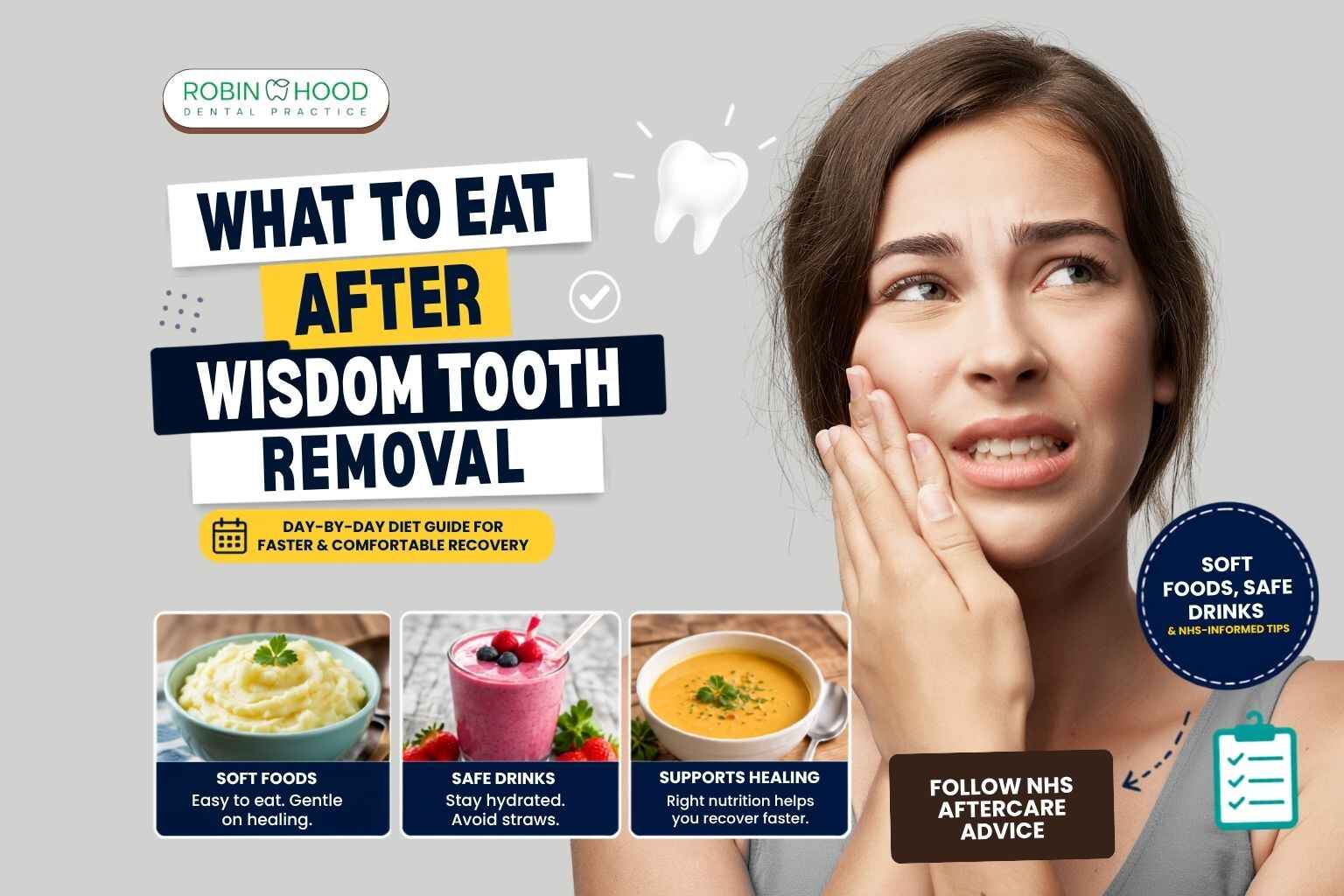
Having your wisdom teeth removed is one of the most common oral surgeries in the UK — and what you eat in the two weeks afterward has a direct impact on how quickly and comfortably you heal. At Robinhood Dental Practice in Hall Green, Birmingham, we guide patients through recovery every week, and diet is one of the questions we're asked most often. This guide combines our day-to-day clinical experience with published NHS aftercare guidance, so you know exactly what to expect at each stage.
Quick Answer
For the first 24–48 hours, stick to cold, soft, or liquid foods (mashed potatoes, yoghurt, smoothies). Avoid straws, smoking, hot food, alcohol, and anything crunchy or spicy for at least a week. Most patients can return to a normal diet within 10–14 days, though NHS guidance notes recovery from wisdom tooth removal can take up to 2 weeks, and this varies depending on how complex your extraction was.
Does Your Recovery Timeline Depend on Your Extraction Type?
Not all wisdom tooth removals are the same, and your diet timeline should reflect that:
- Simple extraction (tooth fully erupted, straightforward removal): soft food usually needed for 3–5 days, with a fairly quick return to normal eating.
- Surgical extraction (impacted tooth, requiring gum incision or bone removal): soft food is typically needed for the full 10–14 days, and swelling or discomfort can last longer.
- Multiple teeth removed at once: recovery and soft-food duration are usually longer than for a single tooth.
If you're not sure which category applies to you, ask us at your post-op check — it changes how strictly you should follow the timeline below.

Day-by-Day Diet Timeline After Wisdom Tooth Removal
Recovery time genuinely varies by how complex the extraction was. Hull University Teaching Hospitals NHS Trust puts the usual recovery time at 5 to 7 days, while Guy's and St Thomas' NHS Foundation Trust notes that "the average recovery time from more complex wisdom tooth removal is 2 to 4 days" of significant discomfort, with milder symptoms continuing beyond that. Use the timeline below as a general guide rather than a fixed schedule.
Day 1–2: The Critical Window
This is when the risk of bleeding and dry socket is highest. Keep food cold or lukewarm and skip chewing entirely.
- Smoothies (eaten with a spoon, not a straw)
- Plain yoghurt
- Applesauce
- Lukewarm mashed potatoes
- Protein shakes
- Cold, smooth soup or broth
Day 3–5: Swelling Starts to Ease
Swelling typically peaks around day 2–3 before improving, though Leeds Teaching Hospitals NHS Trust notes swelling "can last up to 2 weeks" in some cases. It's also common to notice some stiffness when opening your mouth wide (known clinically as trismus) — this is a normal, temporary side effect of surgical extractions rather than a sign anything has gone wrong. You can move to slightly thicker soft foods:
- Scrambled eggs
- Cooled, well-cooked porridge
- Mashed banana or avocado
- Soft cottage cheese
- Blended vegetable soup
Day 6–10: Introducing Chewable Soft Foods
The socket is closing over. Most patients can tolerate:
- Well-cooked pasta
- Soft rice
- Steamed, mashed vegetables
- Flaky, soft-cooked fish
Day 10–14+: Back to Normal
Most patients can return to their usual diet by this point. If you had impacted wisdom teeth removed, or a more complex surgical extraction, healing may take a little longer — if chewing is still uncomfortable after two weeks, book a review appointment with us.
If You Feel Nauseous After Surgery
This is common, especially after general anaesthetic or sedation. Don't force a full meal — start with small sips of water, then plain, bland foods like applesauce or dry toast once nausea settles. Take anti-sickness medication if your dentist prescribed it, and avoid lying flat right after eating.
Simple smoothie recipe to try: 1 ripe banana + ½ cup plain yoghurt + ½ cup milk (dairy or plant-based) + 1 tsp honey, blended smooth. Eat with a spoon, not a straw.

Best Soft Foods for Wisdom Tooth Recovery
| Food | Why It Helps | Dairy-Free / Vegan Swap |
|---|---|---|
| Mashed potatoes | Filling and needs no chewing | Use plant milk/oil instead of butter |
| Yoghurt | Protein plus probiotics for gut health | Coconut or soy yoghurt |
| Applesauce | Gentle on the extraction site, rich in fibre | Naturally vegan |
| Smoothies | Easy to fortify with protein and fruit | Use plant milk + plant-based protein powder |
| Protein shakes | Supports tissue repair | Pea or soy protein shakes |
| Milk | Calcium and protein for healing | Fortified oat, soy, or almond milk |
| Cottage cheese | Soft, high-protein, easy to digest | Mashed silken tofu with a pinch of salt |
| Scrambled eggs | Nutrient-dense, minimal chewing needed | Soft scrambled tofu |
What to Drink — and Why Straws Are Off Limits
Good hydration supports healing, but the suction from a straw can dislodge the blood clot protecting the socket and cause dry socket — a painful condition that significantly delays recovery.
Water
Water is fine and important — the only restriction is avoiding vigorous rinsing or swilling on the day of surgery itself, and skipping the straw.
Tea and Coffee
There's no rule against tea or coffee — the issue is temperature, not the drink itself. Very hot drinks can dilate blood vessels in the healing socket and increase bleeding risk, so let your cup cool to lukewarm before drinking, and sip rather than gulp for the first day or two.
Best choices:
- Plain water
- Lukewarm herbal tea (chamomile or peppermint)
- Milk (dairy or fortified plant milk)
- Smoothies, sipped from a cup
Avoid:
- Citrus or acidic juices
- Fizzy/carbonated drinks for the first 24–48 hours (the bubbles can irritate the socket)
- Alcohol for at least 24–48 hours — it can slow clotting and increase infection risk
- Anything hot for the first 48 hours
Straws: How Long Is Long Enough?
For a straightforward extraction, avoiding straws for 7–10 days is a sensible general rule. If your extraction was surgical — particularly an upper wisdom tooth close to the sinus — your dentist may ask you to avoid straws for longer, since the suction risk is more significant in these cases. If in doubt, ask at your post-op check exactly how long applies to you.
Smoking and Vaping: The Biggest Risk to Your Recovery
If you smoke or vape, avoid it for at least 48–72 hours after extraction — ideally longer. This matters even more than avoiding straws:
- The suction motion of inhaling can dislodge the healing blood clot, just like a straw.
- Nicotine restricts blood flow to the extraction site, slowing healing.
- Chemicals in smoke and vapour irritate the open socket and significantly raise your risk of dry socket and infection.
NHS guidance is consistent on this point: smoking increases the risk of infection after wisdom tooth removal. Bedfordshire Hospitals NHS Trust is specific on the timing, advising patients "do not smoke or vape for at least 72 hours to prevent delayed healing and painful 'dry socket'." If you're a regular smoker, talk to us before your procedure — we can advise on how to manage this safely around your surgery.
Pain Relief, Antibiotics, and Food Timing
Take pain relief with food, not on an empty stomach — this reduces the chance of nausea or stomach irritation, especially with ibuprofen.
If you're prescribed antibiotics, follow the specific instructions given (some need to be taken with food, others without) — check your prescription label or ask our team if you're unsure.
Don't skip meals to avoid discomfort — inadequate nutrition can slow healing, and most pain relief works better when taken consistently with food, at regular intervals.
Foods and Drinks to Avoid
- Hard or crunchy foods — crisps, nuts, raw vegetables
- Spicy foods — can irritate the surgical site
- Hot food and drink — heat can disrupt clot formation
- Carbonated drinks — bubbles irritate the site
- Small seeds and grains — sesame seeds, quinoa, and rice grains can get trapped in the socket in the first few days
- Alcohol — slows healing and can interact with prescribed pain relief
Key Nutrients That Speed Up Healing
| Nutrient | Role in Recovery | Soft Food Sources |
|---|---|---|
| Protein | Rebuilds soft tissue | Yoghurt, cottage cheese, eggs, protein shakes |
| Vitamin C | Supports immune response and wound healing | Mashed banana, soft berries in smoothies |
| Calcium | Strengthens bone at the extraction site | Milk, soft cheese, yoghurt |
| Iron | Maintains energy levels during recovery | Well-cooked lentils, hummus |
Oral Hygiene During Recovery
Diet and hygiene go hand in hand during healing:
- Don't rinse or brush near the site for the first 24 hours — this protects the blood clot.
- From the day after surgery, gently rinse with warm salt water (½ tsp salt in a cup of warm water) after meals to clear away food debris — swirl gently, don't spit forcefully or swish hard. Guidance on exactly how long varies by NHS Trust: Bedfordshire Hospitals recommends rinsing "at least 3–4 times a day after every meal for 10 days," while other trusts specify a shorter 4–5 day window. Follow whatever your dentist or surgeon specifies for your case.
- Continue brushing your other teeth normally, avoiding the extraction site directly for the first few days.
Special Considerations
A few groups need slightly different aftercare. None of the below replaces advice from your own dentist; treat it as orientation, not instruction.
If You Take Blood Thinners
If you take warfarin, apixaban, rivaroxaban, edoxaban, dabigatran, or any other anticoagulant, your dentist will already have discussed this with you before your procedure. Forming a stable clot can take longer, so even small disturbances to the socket can cause prolonged bleeding. The dietary guidance above still applies, but contact us sooner rather than later if gentle pressure with clean gauze for 20–30 minutes doesn't stop any bleeding.
If You Have Diabetes
Diabetes is associated with a higher risk of post-extraction infection and slower wound healing. The advice in this guide applies as written — the main practical difference is being especially vigilant for the warning signs below, and keeping blood glucose well controlled during the healing period. Contact us if healing seems unusually slow or painful.
If You're Pregnant
Standard soft-food guidance applies. The main difference is around pain relief — ibuprofen is generally not recommended in pregnancy, particularly in the third trimester, so paracetamol is usually the safer choice. Discuss pain management with us before your extraction so you have the right recommendation in hand before you leave.
If Your Child Has Had a Wisdom Tooth Out
The same principles apply — soft, cool foods for the first day, avoiding hard or crunchy items for longer. Most children are well enough for a quiet day at school the day after, but check our specific advice if a general anaesthetic was used.
When to Contact Us Urgently
Most recovery is straightforward, but contact Robinhood Dental Practice straight away if you notice:
- Bleeding that doesn't stop after 20–30 minutes of firm pressure with gauze
- Increasing pain a few days after surgery, instead of gradual improvement (a possible sign of dry socket — this typically appears 3–5 days after extraction)
- Swelling that keeps getting worse after day 3, rather than improving
- Fever, or a bad taste/odour that doesn't go away
- Numbness in your lip, chin, or tongue that persists beyond the expected anaesthetic wear-off time
On that last point: nerve bruising during lower wisdom tooth removal is a recognised, if uncommon, risk. NHS Trust data suggests between 2–20% of patients experience some temporary tingling or numbness that can last several weeks, with a smaller 0.5–2% experiencing longer-lasting effects. This is worth knowing, not to worry you, but so you recognise it's a known and usually temporary part of recovery rather than something to panic about — while still being something to flag to us if it persists.
These aren't always emergencies, but they're worth a same-day call — we offer emergency appointments seven days a week.
NHS Costs and Free Treatment Eligibility
Wisdom tooth removal on the NHS in England falls under Band 2, which from 1 April 2026 costs £76.60. This covers the full course of treatment, including any X-rays and multiple extractions carried out in the same visit.
You may qualify for free NHS dental treatment in England if you are under 18 (or under 19 in full-time education), pregnant or have had a baby in the last 12 months, or receive certain income-related benefits. Scotland, Wales and Northern Ireland use different charging structures — check current rates with NHS.uk or your national health service directly if you're outside England.
Frequently Asked Questions
How long do I need to eat soft food after wisdom tooth removal?
Most patients need a soft-food diet for 7–10 days, though simple extractions may only need 3–5 days. Full recovery of the extraction site can take up to two weeks, longer if the tooth was impacted.
When can I eat normal food after wisdom tooth extraction?
Most of our patients return to a normal diet around day 10–14, once there's no pain while chewing and the socket has closed over.
Can I use a straw after wisdom teeth removal?
No. Avoid straws for at least 7–10 days, as the suction can dislodge the clot and cause dry socket. Surgical extractions, particularly upper wisdom teeth, may need a longer straw-free period — ask your dentist what applies to your case.
Can I drink tea or coffee after wisdom tooth removal?
Yes, once it's cooled to a comfortable lukewarm temperature. The concern is heat, not the drink itself — very hot tea or coffee can increase bleeding risk in the first day or two.
Is rice okay to eat after wisdom tooth removal?
Soft, well-cooked rice is usually fine from around day 5–6, but avoid it in the first 48 hours since loose grains can get lodged in the socket.
Can I eat chocolate after wisdom tooth removal?
Soft, melt-in-the-mouth chocolate is fine once numbness has worn off. Avoid anything chewy or with hard inclusions like nuts or toffee, which can disturb the clot or get lodged in the socket.
Can I smoke or vape after wisdom tooth removal?
It's strongly recommended you avoid smoking and vaping for at least 48–72 hours, ideally longer. Both significantly increase your risk of dry socket and slow healing.
What are the signs of dry socket I should watch for?
Increasing pain a few days after surgery (rather than improving), typically appearing 3–5 days post-extraction, along with a bad taste or odour in the mouth, or visible bone in the socket. If you notice any of these, contact us straight away.
What if I feel sick or can't eat right after surgery?
Nausea after anaesthetic or sedation is common. Start with small sips of water, then bland, cold soft foods once you feel able. Contact us if nausea persists beyond 24 hours.
Every patient heals differently, and if you're ever unsure whether a food is safe to eat or your pain isn't improving, it's always best to check with your dentist rather than guess.
Robinhood Dental Practice, Hall Green, Birmingham offers same-day emergency appointments and aftercare support for wisdom tooth extractions, seven days a week.
📞 Call us: 0121 744 1484 · 💬 WhatsApp: 0782 783 4763 · 📅 Book an appointment online
This article is for general information and does not replace personalised advice from your dentist. If you have concerns after your extraction, contact Robinhood Dental Practice or your treating clinician directly.
Reviewed by: Dr Mudasir Ur Rehman, GDC No. 196599 — Robinhood Dental Practice, 1491 Stratford Rd, Hall Green, Birmingham, B28 9HT.
Sources
- NHS — Wisdom Tooth Removal. nhs.uk/tests-and-treatments/wisdom-tooth-removal
- NHS — What is included in each NHS dental band charge. nhs.uk/nhs-services/dentists/how-much-nhs-dental-treatment-costs
- Hull University Teaching Hospitals NHS Trust — Removal of Wisdom Teeth (Third Molars). hey.nhs.uk/patient-leaflet/removal-wisdom-teeth
- Guy's and St Thomas' NHS Foundation Trust — Recovering from Wisdom Tooth Surgery. guysandstthomas.nhs.uk/health-information/wisdom-teeth/recovering-wisdom-tooth-surgery
- Leeds Teaching Hospitals NHS Trust — Wisdom Teeth. leedsth.nhs.uk/patients/resources/wisdom-teeth
- Bedfordshire Hospitals NHS Trust — Removal of Teeth: Post-Operative Care Advice. bedfordshirehospitals.nhs.uk/patient-information-leaflets/removal-of-teeth-post-operative-care-advice